Community colleges have long served as engines of economic mobility in the United States. Every year, millions of students turn to these institutions to learn English, earn professional credentials, change careers or acquire new skills necessary for employment.

Yet there is one significant barrier to educational and economic success that often remains overlooked: the inability to drive.
Research consistently demonstrates that transportation access is closely linked to employment, educational attainment and economic mobility. The Urban Institute identifies transportation access as a key factor influencing upward mobility, noting that limited transportation options can create substantial barriers to employment, education, healthcare and other essential services.
For many adult students — particularly immigrants, refugees, low-income individuals and residents of suburban or rural communities — transportation challenges become a major obstacle to completing educational programs and securing stable employment.
This issue is especially relevant for community college students.
An instructor’s POV
Many adult learners attending community colleges are balancing multiple responsibilities simultaneously. They often work, care for children or elderly family members and attend classes during evenings or weekends. Public transportation may be limited, unreliable or entirely unavailable, particularly outside large metropolitan areas.
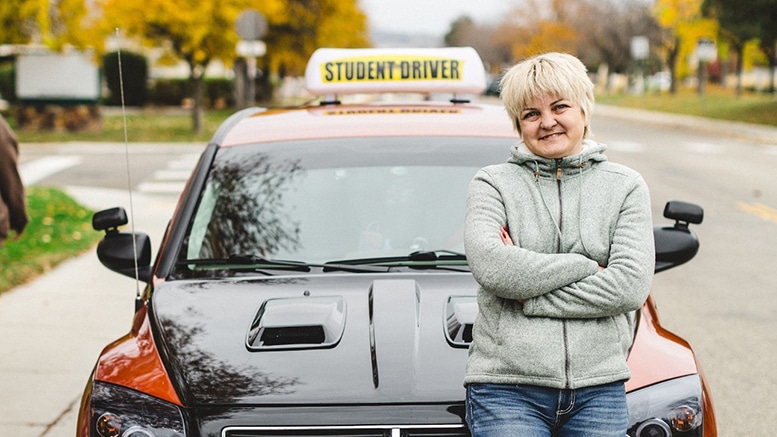
As a licensed driving instructor working extensively with adult learners, immigrants and refugees, I have repeatedly observed how the lack of driving skills restricts educational and professional opportunities.
For many immigrants and refugees, enrolling in college is only the first step toward successful integration. Completing educational programs, participating in internships, accepting employment opportunities and fully engaging in campus life often require reliable transportation.
Without the ability to drive, many students are forced to decline job offers, limit course selections, miss educational opportunities or rely heavily on family members, friends or community organizations for transportation.
More than attendance
Transportation barriers do not simply affect attendance. They can significantly influence graduation rates, workforce participation and long-term economic stability.
I recently worked with a single mother who had enrolled in English-language classes while attempting to improve her family’s financial situation. However, limited transportation options affected nearly every aspect of her daily life. After completing driver education and obtaining her driver’s license, she was able to accept a better-paying job, transport her children independently and continue pursuing her educational goals.
Her story is far from unique.
Research increasingly demonstrates that transportation access should be viewed not only as a logistical issue, but also as an educational equity issue.
Transportation barriers may also affect student persistence and completion. Adult learners who cannot reliably travel to campus, clinical placements, internships or job sites may be more likely to miss classes, reduce their course loads or discontinue their education altogether.
Developing partnerships
Community colleges already recognize that nonacademic barriers significantly influence student success. Institutions across the country have expanded wraparound supports that address food insecurity, childcare needs, housing instability and mental health concerns. Transportation deserves similar attention.
Addressing transportation challenges does not necessarily mean that colleges must create their own driver education programs. Instead, institutions could establish partnerships with licensed driving schools, workforce agencies, refugee resettlement organizations, and community-based nonprofits. Such collaborations might include referral systems, scholarship opportunities, transportation readiness initiatives or integrated workforce programs that combine occupational training with driver education for students whose future employment depends on reliable transportation.
Partnerships between community colleges and licensed driving schools could provide significant benefits for adult learners. Colleges could offer referrals, collaborate with local driving schools, develop transportation support initiatives, or incorporate driver education into workforce readiness programs for specific student populations.
Such partnerships may be particularly beneficial for immigrant and refugee students, many of whom face unique transportation challenges while adapting to life in the United States.
Preparing students for successful employment involves more than academic instruction alone. It also requires ensuring that students possess the practical life skills necessary to access educational and employment opportunities. Community colleges have long recognized that student success depends on addressing barriers beyond the classroom. Transportation barriers deserve greater attention.
Community colleges have long served as gateways to economic opportunity. Yet opportunity remains out of reach when students cannot physically access education or employment. If institutions are committed to workforce development, educational equity and student success, they should begin viewing driver education not merely as a personal service, but as a practical workforce development tool that can help adult learners complete their education, secure employment and fully participate in community life.
* * *
Valeriia Postnykov is the founder and owner of IDrive Driving School in Idaho and a licensed driving instructor specializing in adult, immigrant and teen driver education.