
Dear Community College President,
If you accepted your presidency believing your primary responsibility was to lead a community college, you now occupy a role far more complex than the one you inherited.

The community college presidency has fundamentally changed. Yes, we must point to the variety of market disruptions, including but not limited to artificial intelligence, an expanding adult education market, political pressures at the federal and state levels, and increased unfunded mandates.
However, I am referring to something else. Over time, the role of community college presidency has gradually transitioned from primarily overseeing educational institutions, to spearheading regional talent development enterprises and networks.
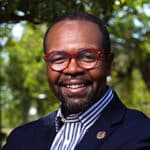
This article is part of a monthly column in Community College Daily by Mordecai Ian Brownlee, president of the Community College of Aurora in Colorado. Read previous column articles.
This evolution was intentional, mirroring the shifting expectations for community colleges. Now, these institutions are tasked not just with educating students, but also with addressing workforce shortages, boosting regional economies, promoting social mobility, supporting local industries, adapting to demographic changes and aiding communities through rapid technological shifts.
As society’s needs grew, the mission of the community college expanded beyond education, and so too did the expectations of its president.
The challenge here lies not in the shift in duties; it lies in the lack of preparedness of those charged with them.
In many respects, we continue preparing presidents for yesterday’s presidency while asking them to lead tomorrow’s institutions. Preparing the next generation of community college presidents will require us to rethink not only how we select leaders, but also how we develop them.
Consequently, as institutions of higher education redesign themselves for the unforeseeable future, whether through consolidation, mergers, shared systems and services, or shifts in institutional mission, current leadership development models risk leaving future presidents underprepared for the expanding responsibilities of the office.
Leading through complexity
The modern presidency is now characterized by one’s capacity to lead effectively across various disciplines at once, rather than being confined to a single area. Today’s presidency requires those who can lead seamlessly at the intersection of education, workforce development, K-12 to university transfer pathways, economic development, public policy, fiscal stewardship, technology, philanthropy and civic leadership.
Additionally, depending on the respective mission and location of an institution, that intersection of responsibilities can expand to include: military and veteran education, international and global partnerships, correctional education, facilities and capital management, communications and brand leadership, federal and state grant strategy, government relations and advocacy, governing board engagement, strategic enrollment management, accreditation, union and non-union employee relations, entrepreneurship and revenue diversification strategy, crisis management, data governance and artificial intelligence strategy.
Increasingly, governing boards and chancellors are selecting presidents not only for their academic experience, but for their proven ability to build partnerships, navigate political environments and lead institutional transformation.
The key takeaway here is that the community college presidency has become dramatically more complex, and that increasing complexity will likely continue to influence presidential tenure.
Presidential tenures
According to the most recent comprehensive study of presidents from all types of higher education institutions, published by the American Council on Education (ACE), the average presidential tenure in 2006 was 8.5 years.
In 2022 (reported in 2023), the average presidency tenure slipped to 5.9 years. Interestingly, this represents a decline of approximately 31%t over 16 years. Pair this with the prediction from the American Association of Community Colleges (AACC) in its 2023 report, “The State of Community College Leadership,” which suggested that, based on age data, more retirements were expected to occur around 2026 as more individuals aged 65 and older chose to retire. According to the report, 36.5% of survey participants expressed plans to retire within the next five years in 2023, with another 11.8% planning to retire within the next nine years. This suggests that additional turnover and shorter presidential tenures can reasonably be expected through 2032, based on reported retirement intentions.
The future of the community college presidency
Over the past few months, I have been privileged to participate in discussions with various organizations about current and emerging presidential training programs and institutes. Interestingly, I am noticing a common thread in these conversations: the community college sector and its funders are recognizing the need to not only prepare candidates to land their first presidency, but also to help these dedicated professionals stay employed in their roles.
The evolving national landscape and the rapid pace of disruption further complicate this effort. Among the thoughts I have shared with those entities, here is the one thought I leave with you: The future of the community college presidency will require those who can fully embrace the concept of ecosystem leadership.
As this nation continues to experience population decline, the financial systems on which our community colleges depend will face increasing pressure. Consequently, our taxation systems, on which our funding formulas depend, will need to be revolutionized in the years to come.
As a result, autonomy, as we once understood it, will evolve to improve institutional sustainability, minimize programmatic market competition, increase student transfer and degree applicability, create operational efficiency, advance student responsiveness, and improve student success and workforce development.
Furthermore, the future community college president will succeed less by managing institutional functions and more by orchestrating regional systems as a chief convener of employers, educators, elected officials, philanthropists, workforce organizations and community partners around a shared vision for regional prosperity.
Put differently, the next generation of community college presidents will be remembered less for the institutions they managed and more for the ecosystems they built.
This transformation should encourage aspiring presidents, because it offers one of the most significant leadership opportunities in community college history. Never before have presidents had such power to impact their institutions as well as the economic strength and social mobility of their communities.
The next era of community college leadership will not be defined by the size of our institutions or the portfolios we directly oversee, but by the opportunities we co-create with other institutions and organizations, the systems we strengthen through collaboration, and the communities we transform together to increase learners’ employability and economic mobility.
Dear Community College President, your job has changed. The question is no longer whether we recognize that reality. The question is whether we will prepare ourselves and those who follow us to lead what comes next.