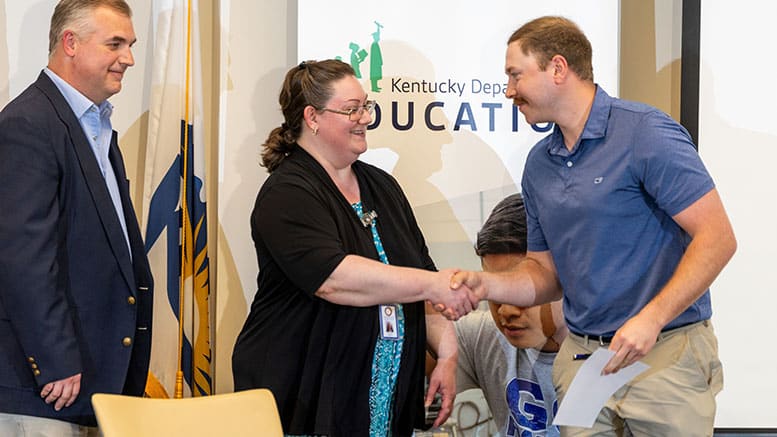
Jessie Schook remembers when communication gaps across the Kentucky Community & Technical College System’s (KCTCS) campuses made it hard to track local industry demands. Multiple siloed conversations meant, for example, a pitch for a customized training project occurring simultaneously with a funding request.
“We had these relationships that weren’t deepening or being used to their full capacity,” said Schook, vice president of workforce and economic development at KCTCS. “Businesses had multiple people from the same college reaching out to foster engagement and pitch various activities. It created a chaotic landscape, like a swarm of honeybees. All the outreach was well-intentioned, but employers experienced this as being confusing.”
KCTCS and its 16 member colleges eased these operational headaches with the launch of a systemwide business mapping system in spring 2022. Today, the initiative aggregates employer engagement across multiple college departments, creating a one-stop shop that emphasizes interdepartmental cooperation, supporters say.
Administrators now access partnerships and activities through an online dashboard – asset maps break down companies by industry and include contact names for each college. The database also highlights collaboration trends, revealing how colleges work with local companies on everything from curriculum development to tuition assistance.
KCTCS uses SharePoint to record all information into a single database, which is updated and maintained quarterly.
“We’re not interested in every conversation being recorded into the system,” Schook said. “We want substantive information, because partnerships and relationships take time to build.”
Tracking business interactions
The map is granular enough to separate transactional interactions from deeper conversations as well. Removing campus silos allows colleges to identify communication gaps while better aligning programming with employer needs, Schook said.
“Workforce development is a collaborative process, and community colleges can’t meet labor market needs without employer partnerships that are deep and deliberate,” Schook said. “This scope of work is the cultural throughline for all of our colleges. It’s not just one department’s responsibility, but everyone’s.”
Employer mapping has created a “holistic” view of how colleges work with local businesses, Schook added. In the wake of the program’s launch, KCTCS-member schools deployed “external engagement teams” to better drive cross-departmental teamwork.
Owensboro Community & Technical College has embedded KCTCS’s engagement model into its weekly cabinet agenda. Leadership meetings use mapping data as a jumping-off point for new industry relationships and to shore up existing partnerships, noted Sheri Plain, Owensboro’s vice president of workforce and economic development.
“Before (the initiative), our work was more disjointed,” Plain said. “We’d have workforce solutions and other departments all doing their own tracking and engagement with businesses. We were all doing it separately, not because we didn’t want to share, but because that’s just traditionally how colleges did it. We needed a collaborative effort so you didn’t have 25 people calling the same employer. That’s what was happening not just at our college, but every college.”
Proactive vs. reactive
Shaking off traditional models is vital for a rural campus intimately tied to manufacturing, a sector encompassing everything from automotive supply to paper production. Advanced manufacturing is another growth area for Owensboro and the surrounding community – the college’s GO FAME earn-and-learn apprenticeship gives participants in-demand technical skills via an advanced manufacturing technician associate degree and several industry certifications.
An alliance with educational collaborative HealthForce Kentucky, meanwhile, is expanding healthcare education amid a statewide nursing shortage. Backed by a $38 million state investment, the partnership includes a 33,000-square-foot Innovation Center that features simulation labs, imaging suites and a team of allied health professionals.
With its emphasis on targeted outreach, Kentucky’s mapping system is creating additional life-changing opportunities, Plain said. Owensboro is discussing AI-related programming with its company partners. Last fall, the college established a customized maintenance program with automative parts supplier Toyotetsu Mid-America. The initiative recently graduated its seventh cohort, resulting in maintenance technician jobs that offer pay that scales with employee experience.
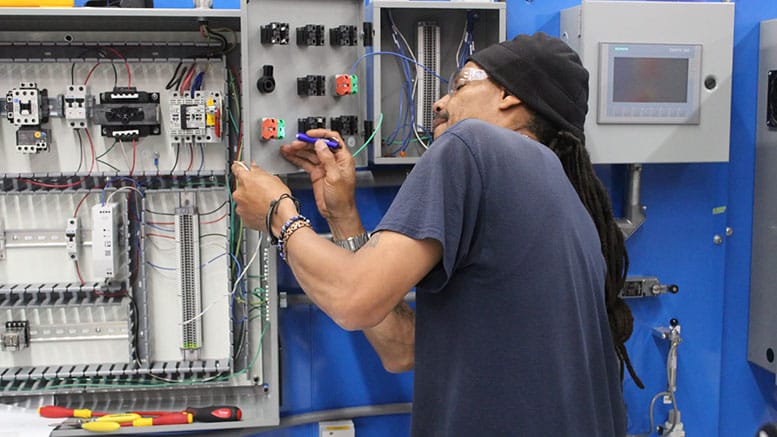
Although data mapping alone might not directly trigger new program development, understanding the full scope of existing partnerships helps kickstart those initiatives, Plain said.
“These relationships used to be more reactive,” she said. “Employers would come to us, then it got to the point where we’d go to them and help them understand what opportunities are coming their way. That’s why the (mapping) initiative has been so valuable. We are able to respond immediately and work with our partners more closely.”
A collaborative approach
Streamlining these networks has delivered benefits far beyond KCTCS and its member colleges. Major area employers like Appalachian Regional Healthcare have seen similar benefits from gaining a clearer view of their collaborative efforts, said Dylon Baker, assistant vice president of workforce initiatives at ARH.
ARH, which provides services to more than 400,000 residents across eastern Kentucky and southern West Virginia, is now building talent pipelines with allies including Hazard Community & Technical College. Among the highlights is a scholarship program currently bolstering the nursing ranks within ARH’s 14-hospital system.
“We’ve invested $1.5 million in scholarships at community colleges over the last three years,” Baker said. “These are students from our region who have a desire to stay. We have a very similar mission and vision for the work that we’re doing.”
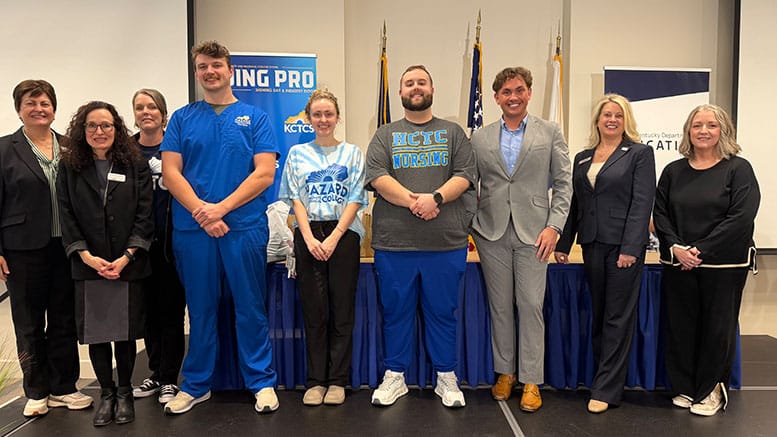
These lofty goals are sometimes stifled by the lack of cooperation among Kentucky colleges. Yet, Baker has noticed a change since comprehensive data mapping was introduced – put simply, partner schools are more collaborative and responsive, not to mention less concerned about competing for every last student, he said.
For instance, articulating the return for a multi-college lab technician program is easier with every stakeholder operating from the same data, Baker said.
“Colleges are sharing accreditations and doing hybrid programs – no way would they be doing that five years ago,” Baker said. “They are seeing programming from a system standpoint. A college may not be able to justify bringing on a program now, but a sister college down the road can do this in a hybrid capacity. Before, they never would have recommended sending a student to another college.”
KCTCS initiated its asset mapping program with a survey to identify existing associations between colleges and local businesses. As of June 2026, the project has identified about 2,800 companies actively working with the college system, said workforce development official Schook.
Thanks to highly detailed mapping, the system tracks employer commitments such as advisory board involvement and customized training. More touchpoints will be added as the program grows – aggregating data is also changing the mindset of companies accustomed to more fragmented communication within community colleges, Schook said.
“We had a major employer in our region giving to a college food pantry,” she said. “A workforce solutions leader met with the company, which had been accounted for in our data. The workforce leader talked with the company about training, and thanked them for the food pantry (donation) as well. The company said thanks for knowing that, because that’s not something they expected. They expect a siloed system, but we are changing that perception.”