For generations, higher education has been central to the promise of a stable career, a picket fence and 2.5 dependents. It has been a pathway to opportunity and upward mobility.
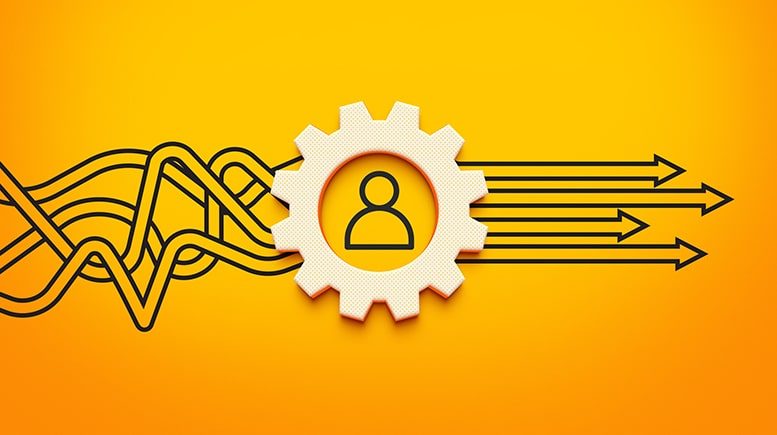
But for today’s students, especially the students at Saint Paul College in Minnesota, where I serve as president, the future feels far less certain. It is shaped by rapid technological change, economic volatility and careers that rarely follow a straight line.
As the future has changed dramatically, higher education should change with it.
And yet, one of the first things students encounter in college is a patchwork of general education requirements, rooted in a model that is nearly a century old, that often feels disconnected from the futures they are trying to build and the careers they hope to pursue.
This tension should not surprise us. General education emerged in a different era and came to align with a version of the American Dream, emphasizing broad intellectual development, civic identity and the cultivation of a well-rounded individual. It was shaped by a time of rising specialization, postwar nation-building and a belief that higher education should prepare citizens as much as workers.
Same ideals but…
Those ideals still matter. In fact, they may matter now more than ever. But for many of today’s students, they are too often experienced as distant or abstract rather than tangible and immediate. Students are not enrolling in college as an abstract intellectual exercise or as a period of leisurely exploration. They are enrolling with urgency to secure a livable wage, support their families and build stability in an economy that can feel increasingly unforgiving.
Community colleges were created with this reality in mind. From their earliest vision, they were designed to remove barriers to opportunity, expand access, and connect education directly to the economic and civic life of their communities. They were never meant to separate learning from livelihood, but to integrate broad education with practical skills in ways that opened doors to both work and upward mobility.
And yet, too often, that connection is invisible. Instead of leaving with a clear sense of the skills they have developed, students experience general education as a checklist. Courses fulfill requirements but do not build a coherent story. They do not say, “I learned how to analyze information and communicate it to different audiences.” They say, “I took a speech class.”
A clearer connection
The value of general education cannot simply be assumed. It must be clear. Students need to see how their coursework translates into the skills and capacities that will carry them across jobs and careers: the ability to communicate effectively, solve complex problems, work with others, adapt and continue learning. These are not secondary outcomes of education, they are the purpose.
At Saint Paul College, we’re working with national nonprofit Education Design Lab to do that. Our work includes identifying the core skills that employers are seeking, demonstrating the core skills that are developed at our institution, and making these skills visible to both students and employers. We’re also helping our faculty recognize and elevate the multiple skills present in their gen ed courses and connecting those skills to students’ personal and professional goals.
This work reflects a broader shift in how we must think about general education. As institutions reconsider the gen ed curriculum, we must avoid pitting liberal education against skills because the two do not stand in opposition. Humanities and science courses are not separate from career preparation. They are where students develop essential capacities such as written and verbal communication, critical thinking, collaboration, adaptability and the ability to navigate emerging technologies.
The challenge is not whether these skills exist within general education. The challenge is whether students can see them, articulate them and apply them in ways that translate into opportunity over time.
Because when we change how students experience education, we do more than prepare them for the future. We shape what they believe is possible, and in doing so, we help shape the future of the American Dream itself.