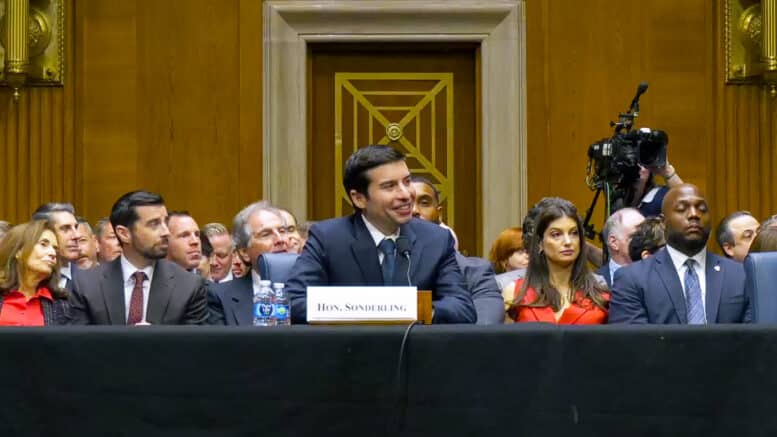
Apprenticeships were the top-of-mind workforce development topic at Thursday’s Senate confirmation hearing for Acting Labor Secretary Keith Sonderling to be the permanent secretary of the Department of Labor (DOL).
Questions over the two-hour hearing of the Senate Health, Education, Labor and Pensions Committee covered a range of issues, from overtime and benefits protections and retirement plans, to AI’s impact on jobs, but registered apprenticeships were the focus for both sides of the aisle regarding workforce preparation. Both Republican and Democratic lawmakers seemed eager to find ways to grow the programs.
Committee Chair Sen. Bill Cassidy (R-Louisiana) said in his opening statement that apprenticeships can serve as a key job training model, but the current system is too burdensome and inconsistent state laws confuse workers and businesses.
“We must simplify the registration process and make it faster and easier for employers to offer apprenticeships,” said Cassidy, who noted the START Act (Streamlining Timely Apprenticeship Registration and Transparency) he introduced with Sen. Jim Banks (R-Indiana) would speed up the approval process for new programs.
Sen. Roger Marshall (R-Kansas) touted the Trump administration’s work on apprenticeships and the new Workforce Pell program to help students attain affordable education and training for in-demand jobs. The Butler Community College alumnus gave kudos to public two-year colleges, which Sonderling agreed with.
“We see community colleges as one of the biggest pieces of this puzzle to be able to help employers, help small businesses design the curriculum to get workers right out of high school and into the trades,” the acting secretary said.
Sen. Lisa Murkowski (R-Alaska) added that it’s important to factor in rural areas, which face unique challenges but also have workforce training needs. She encouraged DOL to find creative ways to include apprenticeships.
In response to a question from Sen. John Hickenlooper (D-Colorado) about how to expand apprenticeships, Sonderling said more industries and employers need to get involved to reach the president’s goal of one million registered apprenticeships annually, as infrastructure and manufacturing jobs continue to grow. The acting secretary said there are currently about 500,000 registered apprenticeships.
Sonderling said it’s also important to better inform students and parents about the programs, with the messaging starting in elementary and middle schools.
Sen. John Husted (R-Ohio) said there are other barriers to participating in apprenticeships. He noted SNAP rules can dissuade some low-income high school students from participating in paid workforce development programs such as registered apprenticeships because they fear their families could lose their SNAP eligibility. His bill, the Upward Mobility Act, addresses those concerns.
“This is a tragedy that we have created a poverty trap in this country for our lowest-income families and their children. I hope that this Congress will fix it,” Husted said.
Sen. Tammy Baldwin (D-Wisconsin) asked Sonderling if he had any plans to revisit industry-recognized apprenticeship programs, an idea pushed during the first Trump administration which critics argued lacked the proven structure of registered apprenticeships. Sonderling responded that the administration is committed to registered apprenticeships.
“I’ve been out there promoting companies to do registered apprenticeships,” he said.
While Democrats were generally receptive to expanding apprenticeships, they were critical of other aspects of the administration, focusing largely on its inter-agency agreements (IAAs). On Wednesday, the House Education and Workforce Committee passed along party lines a package of bills that would codify those agreements.
Democrats on the Senate committee targeted the IAAs between DOL and the Education Department, arguing that DOL lacks the experience to handle various education programs now in its portfolio. They said there is much confusion and concern in the field following the transfer of those programs.
“There’s a right way to do reform,” said Sen. Tim Kaine (D-Virginia), noting it requires approaching lawmakers with ideas for improvement. “The wrong way to do it is to treat the DOE [Department of Education] like it’s a furniture store having a discount going-out-of-business sale and hand off pieces willy-nilly to agencies that don’t have the expertise to deal with them.”