
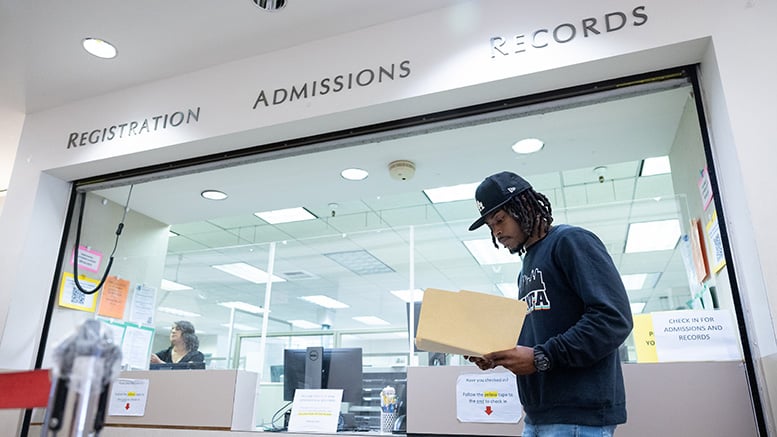
A working parent may complete a community college’s online application in minutes yet spend considerably more time navigating the requirements that follow. Submitting transcripts, meeting placement requirements, securing financial aid, meeting with an advisor and registering for courses often involve multiple offices with separate deadlines and communication channels. Students must manage these requirements alongside employment, caregiving, transportation and other obligations. Unclear instructions or unanswered questions can disrupt arrangements they have worked hard to establish.

These processes can receive less attention than the services themselves, yet they shape the student’s experience. Processes for evaluating transfer credit, awarding financial aid and scheduling courses influence whether students can use the educational opportunities available to them. Students experience these processes through the information they receive, the assistance they obtain and the effort required to move from one step to the next. Fragmented processes leave them responsible for reconciling conflicting guidance, coordinating responses across offices and following up on unresolved matters.
Clear requirements and cross-office coordination reduce this administrative burden. Students can plan expenses when financial aid arrives on time, make informed course selections when prior learning is evaluated promptly, and arrange work and caregiving when schedules are dependable. Well-designed processes let students move forward without repeatedly providing information or repeating completed steps. Attention to these everyday interactions can strengthen students’ confidence in the institution and preserve time for learning, supporting their continued enrollment and eventual completion.
Beyond departmental measures
Assessing the student experience requires looking beyond departmental performance to whether a student’s request reaches resolution. A financial aid office may respond within its service standard, yet the student may still be waiting for an admissions record needed to determine eligibility. Departmental measures can therefore suggest satisfactory performance while overlooking delays in the larger process.
Institutional measures should capture the time and effort required to complete a request across offices. Elapsed time to resolution, repeated contacts, referrals and unresolved requests can reveal difficulties obscured by departmental reporting. Examining these measures alongside completion of enrollment requirements and access to required courses helps identify where administrative demands may impede participation. These patterns warrant investigation but do not establish why a delay or interruption occurred.
Student feedback helps explain what operational data cannot. An unfinished application or missed registration may reflect changed plans, competing obligations or an institutional barrier. Brief surveys after key interactions can help determine whether students understood the guidance, obtained assistance and resolved their concerns. Interviews, observations and focus groups can reveal how particular requirements or handoffs contributed to difficulties, providing a solid basis for deciding what needs to change.
Students’ accounts can also reveal how the same institutional process imposes different burdens depending on their circumstances. Resolving a paperwork issue during office hours may require a student to forgo wages or arrange additional childcare. First-generation students and students from historically underrepresented populations who have had limited access to college guidance may also spend considerable time determining whom to contact. Requirements that seem manageable to administrators can therefore impose unequal costs on students, raising equity concerns about access to educational opportunities.
Institutional processes students rarely see also shape their experience. Hiring affects the availability of faculty, advisors and support staff; procurement determines whether instructional resources arrive when needed. Evaluating these processes requires connecting operational measures to students’ experiences. Reviews of advising vacancies should consider hiring timelines alongside appointment waits and access to guidance before registration deadlines. Procurement reviews should assess whether purchasing delays disrupt instruction or limit access to required resources.
Implementing process improvements
Colleges might start by choosing a process closely tied to student progress, such as onboarding, transfer-credit evaluation, financial aid verification, non-payment dropout or clearing registration holds. Focusing on a single process allows detailed examination, testing changes and evaluating outcomes before expanding to additional processes.
After selecting a process, institutions should map it from the student’s perspective. This mapping identifies student actions, involved offices, decision points, required information and communication flows. Tracing a request from initiation to resolution often uncovers dependencies that departmental procedures may not recognize. The map should include requests that remain unresolved or are abandoned, since completed cases alone may give an incomplete picture.
This examination often reveals how complexity has accumulated. A form added for documentation, an approval introduced for oversight or a review established for compliance may serve a legitimate purpose. Over time, however, these additions can produce overlapping requirements and uncertain responsibilities. Colleges should ask whether each step remains necessary, whether approval requires substantive judgment and whether students can determine the status of their requests. Privacy, accuracy and regulatory safeguards deserve careful examination to determine whether they provide the intended protection with the least necessary burden.
Tapping faculty, technology
Faculty and staff who work with these processes daily are critical to their assessment. They can explain why the process operates as it does and where it depends on manual corrections, duplicate entries or informal intervention. Their participation helps distinguish necessary exceptions from recurring problems that warrant redesign. Workarounds may reflect considerable employee dedication while concealing a process that functions only because individuals repeatedly compensate for their weaknesses.
Using this evidence, colleges can identify a manageable set of measures drawn from the earlier assessment. Alongside processing time and accuracy, colleges should examine whether students resolve their concerns, whether burdens differ across groups, and whether staff workload improves. A shorter turnaround offers limited benefit if students receive incomplete guidance or additional work shifts to another office.
This assessment can also inform technology decisions. An enterprise system, workflow platform or artificial intelligence tool may enhance service when information is accurate, responsibilities are clearly defined, and students can still access human support when needed. Colleges should evaluate whether a tool improves resolution, reduces repeated contacts and helps students complete requirements, while also considering whether it introduces errors or creates barriers for specific student groups.
Over time, institutions can integrate these reviews into annual planning and assessment cycles. Leaders may use the findings to allocate resources, clarify responsibilities and revisit procedures as student needs evolve. Sharing findings with participating employees gives them an opportunity to assess whether changes have addressed the problems they encounter.
For the working parent navigating enrollment, improvement becomes tangible when a request is resolved without another missed shift, repeated submission or unanswered question. These interactions influence whether attending college remains workable alongside other responsibilities. Treating institutional processes as part of educational experience gives colleges a practical means of reducing avoidable demands on students and supporting their progress toward completion.