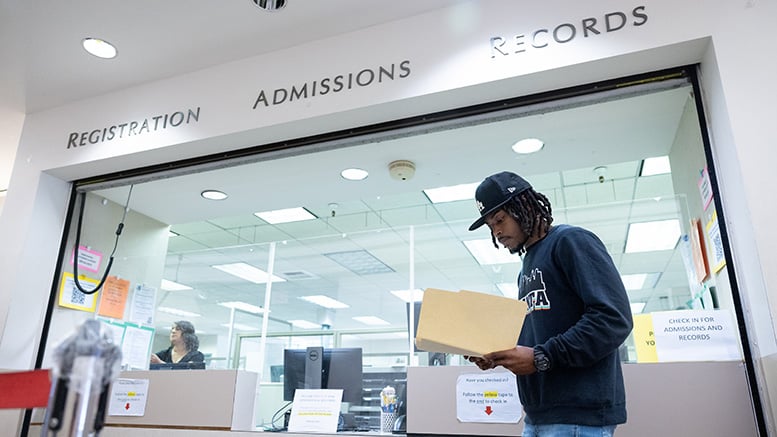
For a working parent weighing a return to college, the decision rarely starts with a program brochure. It starts with a quieter question: Can I actually do this?
That question sits at the center of a shift in higher education marketing. Prospective students don’t lack information; they’re buried in reminders about applications, financial aid and registration across a dozen platforms. The challenge instead is to help that person believe the message applies to them.
Research in psychology, neuroscience and behavioral science offers colleges a practical framework for doing just that. For community college leaders, the takeaway may be less about adopting new technology than rethinking how communication fits into the student experience. From a student’s first website visit to the post-graduation years, the messages institutions send — and the relationships behind them — can shape whether students enroll, persist and remain connected long after they leave campus.
Making a psychological case for kindness
The human brain continually adapts to new experiences, a process scientists call neuroplasticity. Repeated experiences reshape a person’s sense of what’s possible, meaning a confusing website or rushed campus tour can make an opportunity feel out of reach. Meanwhile, while a welcoming tour can be the moment students first picture themselves on campus.
Prospective students often arrive carrying stress, past setbacks or self-doubt. A returning adult, a first-generation applicant or someone changing careers after a layoff may all bring those experiences with them. Trauma research shows that overwhelming experiences shape how people process information, often leaving unspoken questions: Will I succeed? Will I belong?
Adult students often carry a specific worry, says Jessica Howington, a psychology instructor at Northeastern Technical College (NETC) in South Carolina. And she hears versions of those questions every semester: “Am I too old to do this? Am I going to be able to fit in with students who are younger than me?” she says.
Research on self-control has found that how people interpret a challenge influences whether they attempt it. The finding is a reminder that deadline-only messages can miss the more important task of showing students that setbacks are normal — not proof they don’t belong.
The same research also has implications for what happens after a student applies. The gap between application and orientation is often where colleges lose students, Howington says, by simply going quiet.
“It may be summer break, and someone reaches out to the student and says, ‘I know it’s busy here, but I didn’t want you to think I forgot about you,’” she says. “That would mean a lot to them.”
The same principle continues once classes begin: It’s standing by what you say, Howington says, and following through. It’s going beyond mere words or slogans.
Sharing the right amount of info
Maintaining contact is only part of the equation. Colleges also have to consider how much information students can realistically absorb at one time. Behavioral science points to a related problem: When information feels overwhelming, people become less likely to act on it.
“Our brains only take in what’s needed at the time,” Howington says. “If it doesn’t seem important, we’re going to shift it to the side or just throw it away altogether.”
Students respond better to a long list of deadlines broken into a simple checklist, she adds.
At NETC, communication staff members have begun testing messages that explain not just what a deadline is but why it matters to a student’s own timeline and goals. It requires no new software, just a different question before every message goes out. It’s not “What do we need to tell them?” but “What does this person need to feel in order to take the next step?”
Howington points to another strategy: listening.
“Even if someone thinks a question is dumb, every question has to be not only heard, but actually understood,” she says.
It’s about belonging
The importance of belonging extends well beyond enrollment and graduation. At community colleges, students are neighbors and friends. They’re people the college sees every day, says Erin H. Fann, NETC’s vice president of institutional advancement.
“Sometimes what they need most is to know that someone at the college sees their potential and believes they can succeed,” Fann says, and that sense of connection begins long before a student walks across the stage at graduation. “Our relationship with a student starts the moment they first reach out to us. Every interaction is an opportunity to make someone feel welcomed, valued and confident that they belong here.”