Much has been written about filling the “presidential pipeline” at community colleges. But current presidents also worry about filling the vice president pipeline at their colleges.
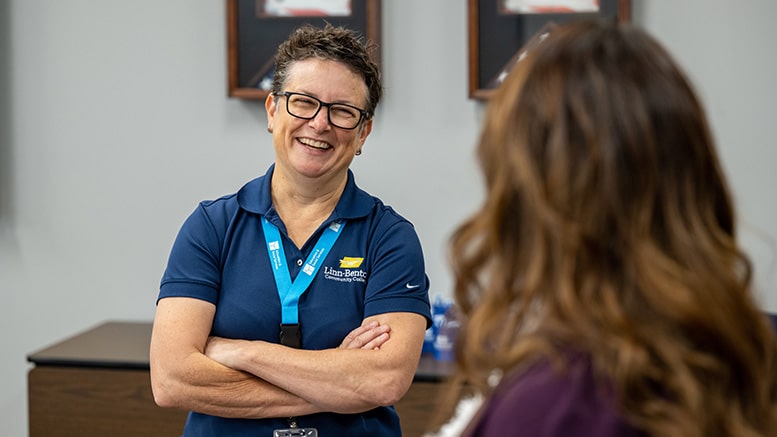
“I spend a lot of time thinking about the future of leadership in the community college space,” says Lisa Avery, president of Linn-Benton Community College (LBCC) in Washington and a member of the American Association of Community Colleges’ (AACC) board of directors.
Avery has grown concerned about the sector in terms of recruiting and retaining strong vice presidents, deans and executive directors.
“At the upper and middle leadership tiers, we have needed a number of critical skills: data literacy, budget experience, understanding of academic and technical content, and workforce connections, as well as personality traits such as humility, adaptability, authenticity, approachability and compassion,” Avery says.
Spread thin
Budget reductions over the past few years at LBCC have led to reductions in the number of vice presidents. Now, there are only two vice presidents: one for academic and student affairs, and the other for finance and operations – and the breadth of work they oversee is big and increasing.
Avery relies heavily on these leaders.
The vice president for academic and student affairs serves as the chief accreditation officer – a vitally important role for the college, Avery notes. And though it’s not on her position description, this vice president also steers LBCC’s transfer process.
Similarly, the vice president for finance and operations has a wide range of responsibilities, including IT, buildings, grounds, financial aid and, of course, budgeting.
“In addition to the responsibilities in their official job descriptions, these vice presidents play key roles in serving on community boards, mentoring employees and – importantly – providing needed consultation with the executive team and me on critical decisions,” Avery says.
A silver lining is that these vice presidents have been at the college a while and have seen the way LBCC has had to transform since the Covid era. But while senior leadership has remained stable, Avery says middle leadership has seen significant movement. Several deans and executive directors have departed. Some have left for jobs at other colleges or have retired, and some have left academia altogether.
Providing encouragement, development opportunities
Some “remarkable” LBCC faculty members have stepped into dean positions in an interim capacity, Avery says. And the college is trying to cast a wider net internally to encourage people to get a taste of leadership.
When the college has temporary management vacancies, those positions are now posted internally for all employees to apply for. By doing so, “We have found a much wider, more varied pool of applicants” than would have been possible by just appointing recent retirees or those who have expressed interest in promotions or taking on leadership roles, Avery says.
“It is a small step, but an easy one to make, and I am proud of our results to date,” she adds.
When the college does hire externally for leadership roles, new hires receive effective onboarding to set them and the college up for future success.
“I believe our field has immense talent; we need to match that talent to existing leadership opportunities, and then provide strong support and effective onboarding to help new deans and vice presidents succeed and thrive,” Avery says.
Not everyone wants to move into those positions, though.
“We need colleagues who want to grow into these roles and provide long-term institutional stability without feeling pressured to move up the career ladder,” Avery says.
She adds that community colleges are not just higher education institutions, but also major employers, and they’re becoming more innovative and strategic in preparing the workforce for a very uncertain future.
“Our sector benefits when we recognize within our organizations and communities the talent that already exists while being open to broad perspectives from new colleagues,” she says.
Though LBCC doesn’t have a formal mentoring program for staff and faculty, employees have opportunities to participate in leadership programs sponsored by AACC, the American Association of Women in Community Colleges (AAWCC), Aspen Institute for College Excellence and others, as well as programs through the Oregon Community College Association.
“Occasionally, we have lost employees to other community colleges after their participation in these leadership academies, but to me, that is still a positive outcome, because it is helping grow the middle and upper leadership of our sector as a whole,” Avery says.
Moving up, reaching back
Dawayne Kirkman had served at Sinclair College in Ohio since 2002 before taking a senior leadership position down the road at Clark State College in 2021. About applying for the position, he says, “I decided to throw up a rock and see what happens.”
It was, of course, a lot more than luck or chance that got him the job. He has developed leadership skills in every position held along the way and had good mentors – and he has a passion for leadership.
Growing up in the Appalachian region in Kentucky, Kirkman was the first male in his family to graduate high school, and the first in his family to go to college. His dream since kindergarten was to be a teacher.
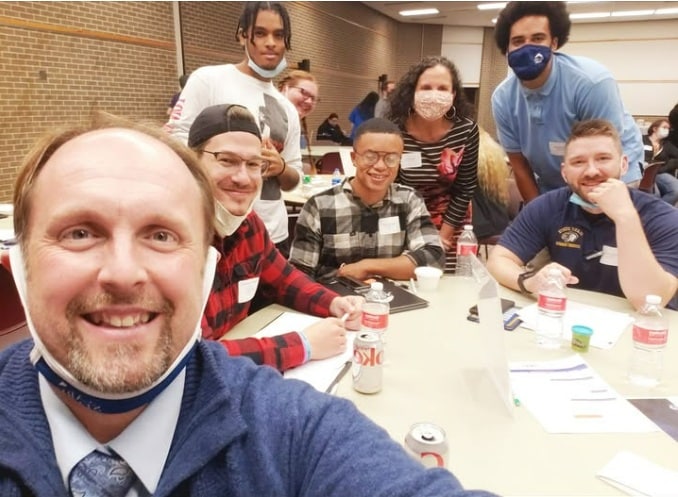
Though he’s not leading a classroom, he’s still making a difference in students’ lives. His first community college job was at Sinclair College, where he started as an admissions officer and eventually became assistant vice president of the college’s regional centers.
At Clark State, he serves as senior vice president of student affairs, enrollment management and regional locations.
“I’m not in the classroom, but I still feel like I’m an educator,” Kirkman says.
Along his leadership trajectory, Kirkman has taken advantage of professional development opportunities, including AACC’s Future Presidents Institute. (In September, Kirkman spoke to AACC’s Future Leaders Institute participants about relationship-building as a strategy for leadership and decision-making.)
Formal professional development is important, Kirkman says, but so is mentorship.
“It’s so critical to have a mentor,” he says.
Kirkman didn’t just stumble into opportunities; people along the way helped and encouraged him to take on new roles.
He’s tried to take the good examples of mentorship and leadership he’s observed and benefited from and pass them on to his own staff. He takes note of staff members’ strengths, skills and interests and, when possible, provides them with development and leadership opportunities that align to those attributes.
“You have to invest in people and take care of them,” Kirkman says.
He wants to help people grow in and beyond their roles – if and when they want to. When opportunities arise for new responsibilities, he makes sure he’s getting their “best yes.” He doesn’t want someone to take on a new role out of a sense of obligation.
Whether or not someone is interested in moving up the ladder, what matters is “you never stop growing and never stop helping others get where they want to go,” Kirkman says. “Keep moving, keep growing and keep refreshing the lives of others. That is where growth happens.”
Preparing for the next move
Parita Vithlani has been an associate professor of psychology for 16 years – the last six of which have been at the Community College of Baltimore County (CCBC) in Maryland. She’s ready to move into the next phase of her career, which is likely a department chair position, followed by becoming a dean.
But she’s also trepidatious. Changes to work/life balance “is something I definitely fear,” Vithlani says. Then there’s the responsibility of “putting out fires” and the fast-changing nature of higher education, which includes the growing use of artificial intelligence.
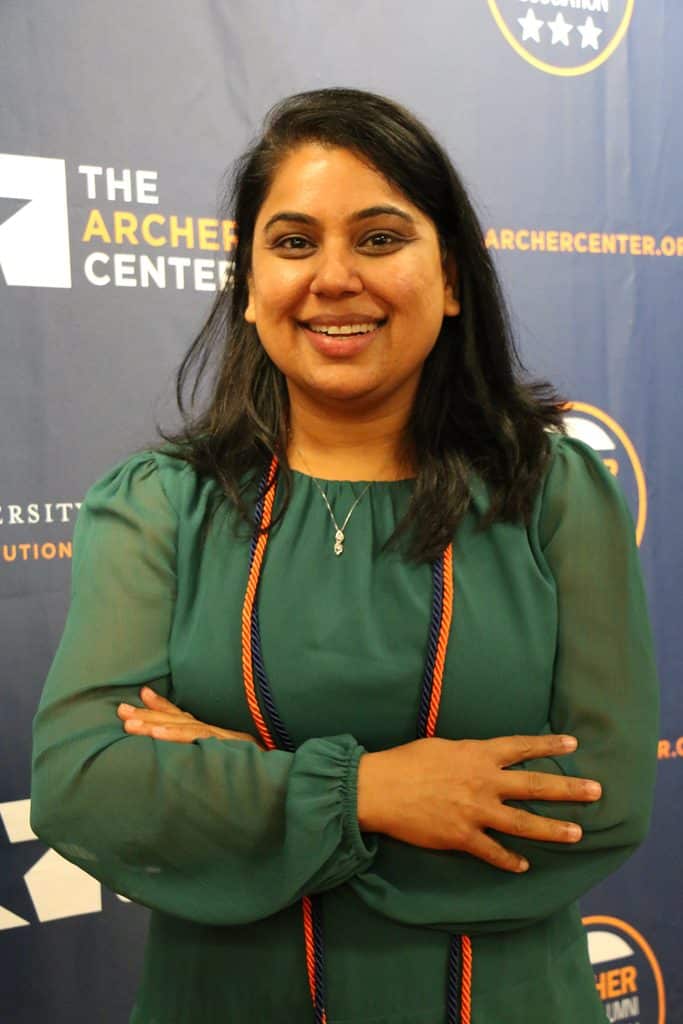
“Every day is a challenge,” she says, but also notes “there’s growth in that.”
To prepare herself, Vithlani is participating in leadership development programs. In September, she attended AACC’s Future Leaders Institute, which she says gave her a good perspective on work/life balance and prioritizing and provided career coaching.
She’s also joined the AAWCC, where she was partnered with someone in a similar position so they could learn from each other.
Vithlani currently is benefiting from a robust leadership program at CCBC, led by President Sandra Kurtinitis. The yearlong program allows participants to learn more about the college’s leadership structure at the college and its priorities, and provides opportunities to talk with board members, legislators and internal and external stakeholders. Participants also have a project: identify gaps in CCBC’s institutional priorities and research solutions to close those gaps.
“Programs like this are worthwhile,” Vithlani says, not only for the hands-on learning, but because they help staff and faculty decide if and where they want to grow at the college and in their career.
Mentorship also has been helpful. She’s had formal and informal mentorship all along.
“I’ve placed myself in different spaces where I would get mentored,” Vithlani says, including at CCBC. “I want to seek advice. I want to seek growth.”