
In reflection of 2025, community colleges and higher education experienced an array of events that led institutions to reevaluate their public value proposition, student experiences, commitments, academic programs, policies, partnerships, practices and strategies for advancing their respective institutional missions.

Whether such considerations were spurred by the array of federal executive orders enacted by the Trump administration, reported breakdowns in the federal financial student aid system, the discontinuance of discretionary Minority-Serving Institution (MSI) federal funding, reported curriculum restrictions at community colleges, the tightening of state allocated higher education funding, or concerns over the “real” cost and return on investment (ROI) of higher education for learners, community colleges have had to pivot rapidly and constantly over the past 12 months.
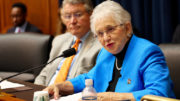
This article is part of a monthly column in CC Daily by Mordecai Ian Brownlee, president of the Community College of Aurora in Colorado.
Overall, these forces indicate a fundamental shift: 2026 will favor community colleges that reinvent themselves to ensure institutional resilience, market relevance and programmatic alignment with workforce and community needs.
As institutions prepare for the year ahead, critical developments continue to unfold at a national scale that will affect how community colleges proceed with funding and operational strategies. Last month, the U.S. Education Department (ED) released seven priorities under the Fund for the Improvement of Postsecondary Education (FIPSE) to drive action in four priority areas, including the development of high-quality short-term programs. Days later, ED announced six new interagency agreements (IAAs) with four federal agencies that accelerate efforts to decentralize and disband major components of the department.
These developments are unfolding just as the Reimagining and Improving Student Education (RISE) Committee reached consensus on the One Big Beautiful Bill Act’s loan provisions. Over the next month, the Accountability in Higher Education and Access through Demand-driven Workforce Pell (AHEAD) Committee is set to negotiate Workforce Pell and Eligible Workforce programs, amongst other topics.
Being prepared to act
Despite what can be perceived as uncertain realities for 2026, there are several truths that community college presidents, leaders, faculty and boards of trustees must be aware of and prepared to act on to ensure institutional responsiveness, relevance and sustainability for the season ahead. As the American Association of Community Colleges’ “Resilient by Design” report notes, “The coming years will see unprecedented change on several dimensions critical to community colleges’ success in continuing to power American economic prosperity and societal health. The nation and its citizens need community colleges to fulfill their missions and promise.”
The question facing our sector is not whether disruption will continue, but how presidents and their institutional communities will position their colleges to thrive amid it. Below are some of those factors and perspectives on how to address such opportunities:
Design an institutional infrastructure that drives mission-centered innovation rather than crisis-driven change. As a mentor once told me, systems only do what they are designed to do. When colleges struggle with inconsistent or incomplete academic program assessment, siloed or biased decision-making, strategic plans without measurable key performance indicators (KPIs), failure to modernize customer relationship, learning management and enterprise resource management data systems, resource allocations that do not reflect institutional priorities, under investment in the continuous development of faculty and staff, inconsistent shared governance, or cultures where employees feel expendable rather than valued, the results are predictable: initiative fatigue, misalignment, and organizational drift.
To build resilient and future-ready institutions, community colleges must honestly evaluate their cultures, personnel practices, decision-making processes, resource-allocation systems, innovation pipelines, communication structures and project-management approaches. Only by identifying misalignment, errors and waste can institutions redesign themselves for mission optimization and fully deliver on the promises of their strategic plans.
Champion workforce, transfer and liberal arts programs as integrated pathways that expand access, strengthen economic mobility and enhance market responsiveness. While every college’s program portfolio will vary based on demographic, economic, political and industry realities, the mission of community colleges remains constant: to serve as accessible engines of upward social and economic mobility by equipping learners with the education, tools and support necessary to achieve it.
This requires caring for the whole learner and recognizing that true ROI begins with helping individuals achieve stability. Addressing food, housing and transportation insecurities; providing mental health and social-service support; and expanding mentoring, shadowing, internship, externship and integrated learning opportunities all contribute to sustainable success. These experiences expose learners to emerging careers and ensure that the skills and knowledge they acquire are both relevant and transferable.
Achieving this level of care means moving beyond debates about which pathway is most important. Instead, we should embrace each path’s value, and our responsibility as educators and leaders is to utilize data to build the opportunities, partnerships, and supports that align with the realities of the communities we serve.
Build a comprehensive institutional strategy that positions the college as a primary solution to America’s emerging workforce crisis. Building on the learner-strategy above, presidents and chancellors must educate their boards, community partners, stakeholders and internal teams about the structural factors shaping the nation’s workforce preparedness.
As I have previously written, America is currently on track to experience a workforce shortage crisis – one that will challenge economic competitiveness and our geopolitical standing unless higher education responds with urgency and purpose.
To address this, our community colleges must recenter, retool and elevate our institutional capacity to develop new learner pathways to address skills gaps, industry partner needs, strengthen our K-12 partner pathways to create more dual-credit and concurrent enrollment to certificate to apprenticeship to degree pathways.
This work requires community colleges to see themselves not only as developers of programs but as brokers of opportunity. As demonstrated by organizations such as the Education Design Lab, which is leading the Community College Growth Engine, and Jobs for the Future, which is leading its “No Dead Ends” policy initiative, our community colleges must lead the conversation in our communities to promote the understanding that learning and work cannot continue as separate islands; they must be integrated into a unified system that provides responsive, efficient and economically relevant pathways for learners. This integration is essential not only for institutional vitality but for the long-term strength of our national workforce.
As community colleges approach 2026, “intentionality” must be the operative word that guides every action we take. Our sector’s competitive superpower lies in our ability to move quickly to address the needs of our communities and their broader ecosystems — K–12 partners, employers, elected officials, learners and supporters. By remaining grounded in our mission statements, ensuring true systems alignment with the priorities outlined in our strategic plans and cultivating an environment where all stakeholders are informed, engaged and integrated into the institution’s direction, our colleges will be better prepared to navigate both the known and unforeseen realities ahead.
The work ahead will undoubtedly demand our best, but it will also reaffirm why community colleges have always been — and will remain — essential to America’s success.