

The number of credentials awarded at community colleges in 2023-24 increased by more than 90,000 from the prior year, according to the just-released Fast Facts 2026 from the American Association of Community Colleges (AACC).
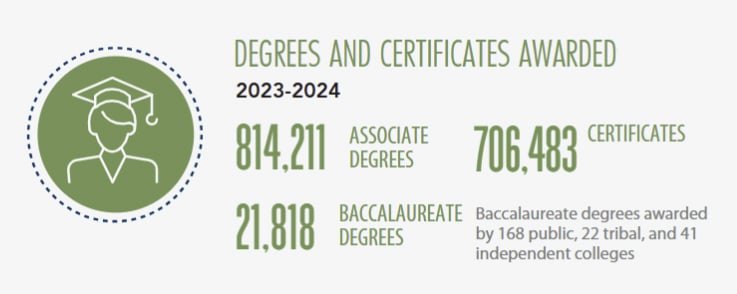
Based on AACC analysis of federal data, awarded certificates saw the biggest jump, increasing 11% (or 77,645) from 628,838 to 706,483. Awarded degrees rose nearly 2% (13,253), from 800,958 to 814,211, according to a comparison of the 2025 and 2026 Fast Facts. The number of awarded community college baccalaureates dipped 1% (286) from 22,104 to 21,818.
The median full-time earnings for students with an associate degree were $57,148 in 2025, up from $55,016 in 2023, according to the analysis.
While the average and median ages of community college students stayed at 27 and 23, respectively (dual-enrolled students were not included in these averages), the percentage of students younger than 22 increased by 3 percentage points to 60%, while the percentage of students ages 22 to 39 decreased by 3 percentage points to 32%.
The percent of full-year, unduplicated headcount students at community college who are high school students increased from 20.4% in 2024-25 to 22% in 2023-24, according to the analysis.
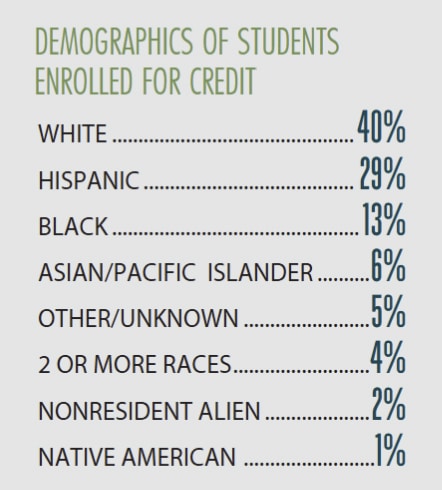
Looking at student demographics, the percentage of students enrolled in credit programs dipped from 42% to 40% for White students, while it increased for Hispanic and Black students, from 28% to 29%, and from 12% to 13%, respectively.
In terms of funding, state and local governments and tuition comprise the bulk of community colleges’ revenue sources. The percentage coming from states increased from 34.4% in 2022-23 to 36.2% in 2023-24, according to the analysis. The portion from local government (22.0%) and tuition (20.7%) stayed relatively the same, while the percentage coming from the federal government dropped from 14.7% to 10.9%. The portion coming from other sources increased from 8.3% to 10.1%.