
In an era defined by demographic shifts, workforce disruption and increasing accountability, community colleges are being called to evolve more rapidly than ever before. At Marion Technical College in Ohio, this moment of pressure became an opportunity for transformation.
As we emerged from Covid, the institution started transforming how, what and, more importantly, why we do things. This transformation has resulted in record enrollment, expanded grant funding, improved student retention and increased state subsidies. These outcomes reflect not a single initiative, but a comprehensive institutional shift.
The first lesson is that sustained progress begins with a clearly defined purpose. At Marion Tech, that purpose was sharpened around student success — not simply access, but completion and career relevance. We wanted to ensure we were providing high-quality programs that led to good jobs or successful transfers upon completion.
This article comes from the current issue of the Community College Journal, published by the American Association of Community Colleges.
As with most community colleges, we serve a large portion of first-generation students, economically disadvantaged students or students facing other potential barriers to education. The impact we can have on students’ lives is great. We — indeed, all community colleges — have the admirable job of changing family trees, but we must keep this at the forefront of all we do.
To provide the necessary resources to begin the transformation, we partnered with Columbus State Community College to help us seek grants. This partnership was a unique and innovative way to address our funding needs, and the first six years of the collaboration have yielded amazing results for Marion Tech. The grants allowed us to focus resources on student success, through personnel, software, services and equipment. This successful partnership was recently awarded the Bellwether Prize for innovation in the policy, governance and finance category.
Related article: The power of partnerships
Equally important was our acceptance into the Rural Guided Pathways project led by the National Center for Inquiry and Improvement (NCII). Through this project, we were able to focus our work on guided pathways, receive coaching, review our data in greater depth, connect with business and K-12 partners and expand our work to a large portion of the college.
With the development of the Guided Pathways Steering Council (GPSC), our work has accelerated. Through the GPSC, the work of implementing all that we are learning from NCII is distributed across the college, therefore allowing more people to feel involved in the work of student success. Beginning in 2025, we opted to continue in the second cohort of Rural Guided Pathways to maintain our institutional momentum.
Setting ourselves apart
As part of our strategic plan redesign, we were deliberate in choosing goals that required us to move toward greater innovation and to do work that would make us stand out in a crowded field of exceptional community college colleagues. We want and need to do work others may not be doing — and do it at scale — to make a difference for our students and to distinguish us as an institution.
In Ohio, this is imperative because our state funding is 100% performance-based. Meaning, student success drives how much money we earn from the state, and these funds represent over 50% of our operating budget. Doing the right thing for students not only improves their success but also increases college success in our funding formula and through increased enrollment.
So, how did this new alignment of strategic plan, seeking new financial support, and learning new ways of serving students do for our students and the college? In 2020, Marion Tech, through our partnership with Columbus State, received our first-ever Title III grant worth over $2.2 million and our first National Science Foundation (NSF) grant to create a new smart manufacturing major.
With these two grants, we were able to start the slow transformation process. These initial changes included:
- Additional staffing in advising and other student-facing areas of the college
- The construction of the Link One-Stop, housing the financial aid, registrar, business, career services and admissions offices
- The purchase of Element451 CRM software
- The purchase of much-needed new engineering equipment
Between 2021 and 2026, we received an additional five NSF grants, a Rural Postsecondary Economic Development Grant (RPED), a U.S. Department of Labor grant, a TRIO grant and have been a sub-awardee on several grants with Columbus State. All of these grants enabled the college to hire personnel, renovate spaces, purchase equipment and software and revise processes to better serve students.
The implementation of multiple changes through the Title III grant, our participation in the Rural Guided Pathways project, and our success through grants have led to improved student outcomes. In the last five years, retention rates for part-time students, which is approximately 75% of our enrollment, has increased from 28% to 63%, enrollment has increased from around 2,100 students in 2021 to over 3,700 students in 2026, and our state subsidy has increased from $7.5 million in fiscal year 2020 to $10.2 million in FY26, with the largest increases occurring in the last two fiscal years. All of this is a direct result of a series of strategic decisions to change how and why we do things.
The experience of Marion Technical College underscores a broader reality facing higher education: transformation is not optional, but it is achievable. The changes and corresponding results do not mean we are better or know more than others. We drew on what was working at several other institutions and strove to implement the transformative changes we believed would best serve Marion Tech and our students.
It does require clarity of purpose, a willingness to distribute leadership and a commitment to aligning innovation with student needs. Perhaps most importantly, it demands an institutional culture that views change not as disruption, but as an opportunity to fulfill its mission better.
* * *
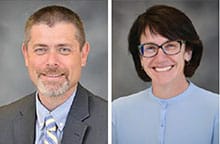
Ryan McCall, Ph.D., is president, and Amy Adams, Ph.D., is executive vice president of Marion Technical College in Marion, Ohio.