
Walk onto almost any community college campus and its workforce priorities are easy to see. Nursing students train in simulation labs. Welding students learn in well-equipped shops. Colleges invest in cybersecurity, electrical technology, HVAC and advanced manufacturing because preparing students for these industries requires more than a classroom and a textbook.

Those investments make sense. But agriculture deserves the same conversation.
Modern agriculture is no longer simply tractors, livestock and crops. Today’s industry increasingly incorporates drones, sensors, automation, precision technology, controlled-environment agriculture and data. If community colleges are designed to respond to regional workforce needs, agriculture should be treated as workforce development — not as a niche educational interest.
An aging workforce
According to USDA’s 2022 Census of Agriculture, the average American agricultural producer is 58.1 years old. Thirty-eight percent are 65 or older, while only 9% are younger than 35.
There are encouraging signs. More than 1 million Americans are classified as beginning producers, and their numbers increased 11% between 2017 and 2022. But even beginning producers have an average age of 47.1.
Agriculture’s workforce challenge is also much larger than finding the next generation of farmers. The industry needs greenhouse technicians, irrigation specialists, equipment technicians, drone operators, crop consultants, agricultural entrepreneurs, precision-agriculture specialists and agribusiness professionals.
Many of these careers do not necessarily require a bachelor’s degree. They do require education and technical training. That is precisely where community colleges should excel.
Invest in agriculture
Community colleges have demonstrated that they can respond when industries need skilled workers. When communities need nurses, colleges invest in nursing programs and simulation laboratories. When manufacturers need welders, colleges build welding shops and purchase equipment.
Agriculture should receive the same workforce analysis, particularly in regions where farming, horticulture, food production and agribusiness remain economically important.
Yes, modern agricultural programs can be expensive. Greenhouses cost money. Agricultural equipment costs money. Irrigation systems, UAVs, hydroponics and precision-agriculture technology require investment. But cost alone should not disqualify agriculture.
We do not abandon nursing because simulation laboratories are expensive. We do not teach welding without welding equipment. We would not expect cybersecurity students to prepare for modern careers using outdated computers. Agricultural education should be held to the same standard.
- Heartland Community College in Illinois opened a 29,500-square-foot, $23 million Agriculture Complex in 2024 supporting instruction that includes plant and soil science, precision planting, drones, heavy equipment and agribusiness.
- Northeast Community College in Nebraska combines precision agriculture with hands-on training at its 500-acre college farm. In 2026, support from the CHS Foundation also helped the college develop a 16-credit Agriculture Drone Pilot Certificate.
- At Blue Ridge Community College in North Carolina, an automated greenhouse provides training for horticulture students while also creating opportunities for students studying information technology and cybersecurity.
Beyond farming
Part of the challenge may be how we present agriculture to students. Ask a high school student whether he or she wants to become a farmer and the answer may be no. Ask about flying drones, operating autonomous equipment, using artificial intelligence to identify crop problems, managing automated greenhouses or using satellite imagery to make decisions, and the conversation may change.
Agriculture does not have only a workforce problem. It has a visibility problem.
Students cannot pursue careers they have never been shown exist. Community colleges can change that.
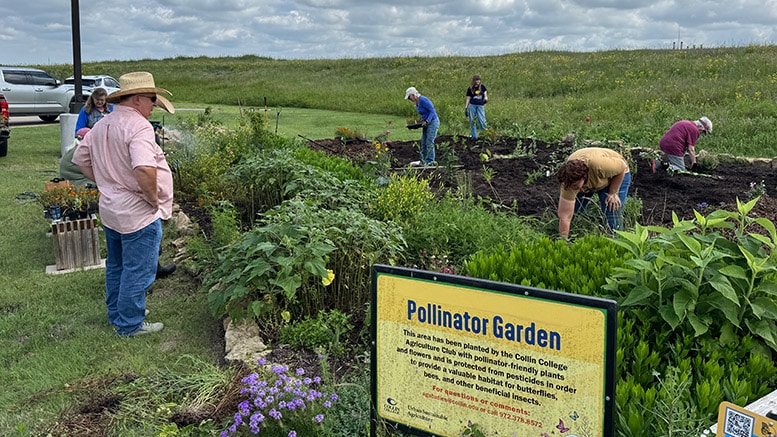
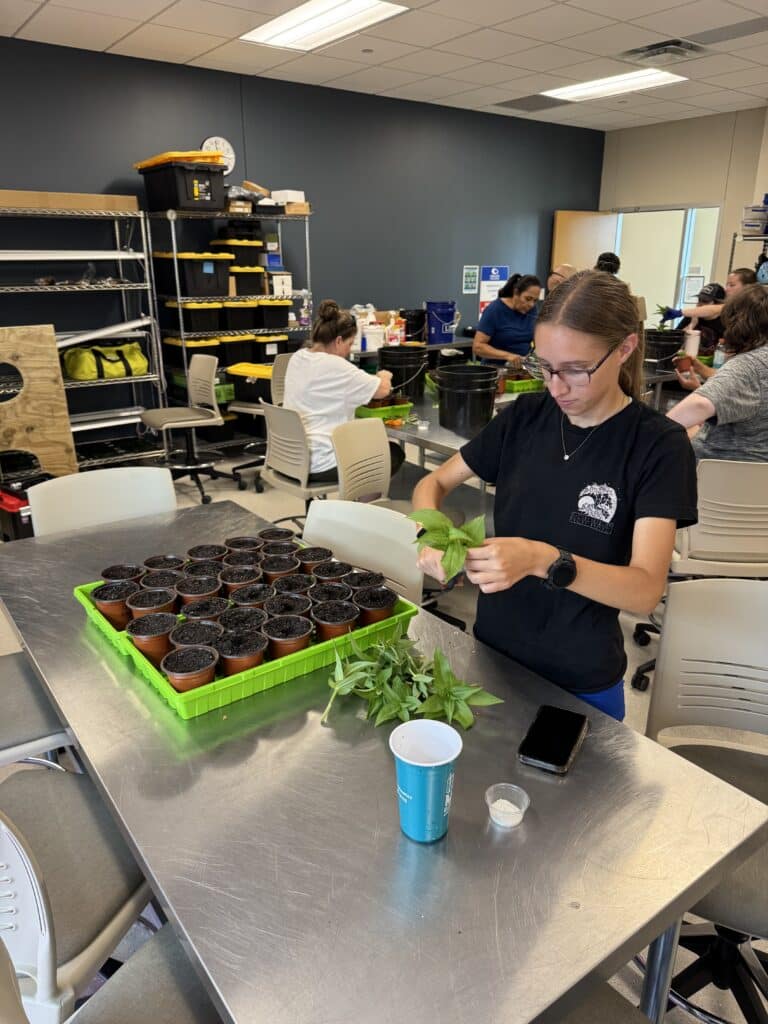
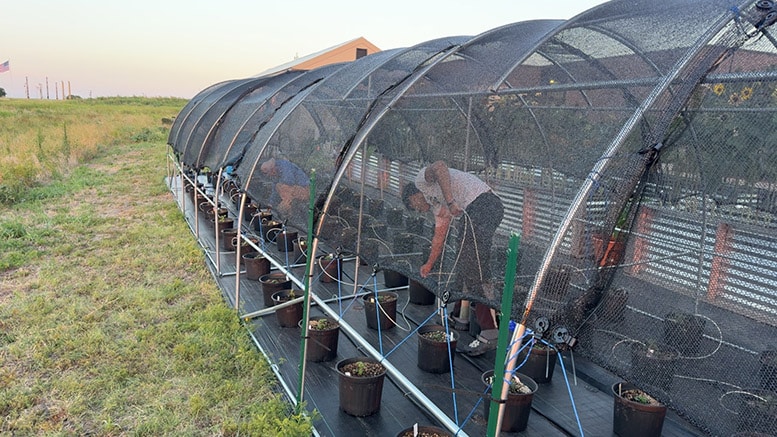
In my own agriculture courses at Collin College (Texas), I see the value of this approach firsthand as students move between the classroom and hands-on experiences involving plant propagation, irrigation, greenhouse production and community-based agricultural projects.
Dual-credit courses can introduce high school students to agriculture. Certificates can provide rapid entry into technical occupations. Associate degrees can lead to employment, entrepreneurship or transfer. Continuing education can help existing producers learn new technologies without returning to college for another degree.
Community colleges can also become part of agriculture’s “last mile” — connecting research and emerging technologies with the people who will actually use them. Universities conduct research. Extension translates research into practical knowledge. Companies develop new technologies. Community colleges can provide another place where students, producers and workers put those ideas into practice.
Local food resilience
There is another reason for community colleges to invest in agriculture: food security.
The economics of producing food are becoming more challenging. According to the USDA Economic Research Service, total U.S. farm production expenses are forecast at $492.8 billion in 2026, up 4.5% from 2025. Fertilizer, lime and soil-conditioner expenses alone are forecast to increase 15.3%, while fuel and oil expenses are projected to rise 28.8%.
At the same time, millions of American households are struggling with access to food. USDA food-security data show that 13.7% of U.S. households — 18.3 million households — experienced food insecurity in 2024. That rate was statistically similar to 2022 and 2023, but significantly higher than the annual rates recorded from 2016 through 2021.
Teaching agriculture locally will not solve either problem by itself. But community colleges can give people practical skills to grow food, start small agricultural businesses, use resources more efficiently and participate in local food systems.
That can mean teaching a student to operate a commercial greenhouse or precision-agriculture system. It can also mean teaching someone how to manage a small farm, grow produce for a farmers market, install efficient irrigation or produce food in an urban or suburban environment.
Agricultural education, then, is not only about preparing people for jobs. It can also strengthen the capacity of communities to produce food locally and become more resilient when the food and agricultural economy is under pressure.
A timely opportunity
The House-passed 2026 Farm Bill includes Section 7123, Grants for Community College Agriculture and Natural Resources Programs. The proposal would provide competitive grants for eligible two-year institutions to conduct agricultural workforce training, education, research and outreach.
The American Association of Community Colleges and the Association of Community College Trustees have urged the Senate to support community-college agriculture programs as it develops its Farm Bill proposal. That recognition matters. But federal investment should be only part of the conversation.
College leaders, industry, universities and local communities should also ask what agricultural workforce their regions will need 10 years from now – and what educational infrastructure should be built today to prepare for it.
Not every community college needs an agricultural program. But colleges serving agricultural regions should give agriculture the same strategic consideration they give healthcare, cybersecurity, advanced manufacturing and the skilled trades.
That means investing in faculty, equipment and facilities. It means developing industry partnerships. And it means showing students that agriculture offers far more careers than they may realize.
Community colleges cannot solve every challenge facing American agriculture. But if we are serious about its future, community colleges should be part of the solution – and we need to invest accordingly.
(The views expressed in this article are those of the author and do not necessarily reflect the views or official positions of Collin College.)