Change is constant, and education is no exception. One thing that doesn’t change is how important it is for education to stay connected to industry trends.

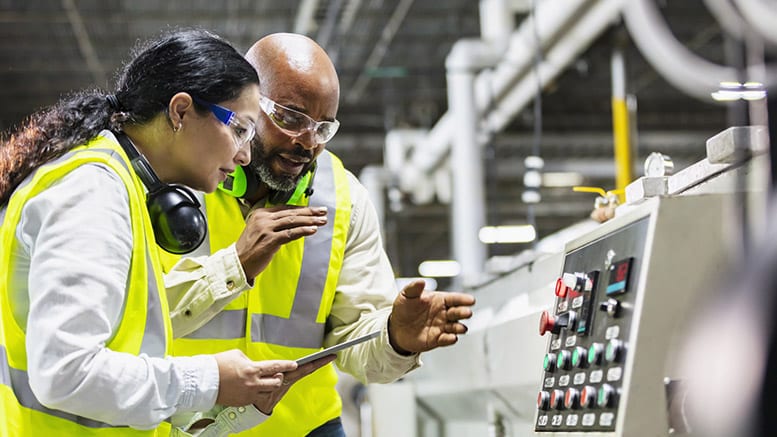
Deloitte’s 2026 Manufacturing Industry Outlook shares an overview of changes that will happen in the workforce, including more manufacturers plan to incorporate smart manufacturing systems and utilize agentic AI, and they need a skilled workforce that can handle these upgrades. Today, manufacturing technicians need to have a variety of experiences from hands-on skills to an understanding of AI. According to the same Deloitte study, “more than 81% of task hours in manufacturing are expected to remain human-driven.”
AI will not be replacing the critical work of a maintenance technician to fix the machine but will be a tool to increase efficiency and productivity.
Impact on educators
To meet the needs of manufacturers and the workforce, career and technical education (CTE) needs to be ready to train technicians with the appropriate skills; therefore, educators need the resources to also skill up with these new technologies.
In education, a lot of these changes are titled Industry 4.0, which includes data and analytics, the industry internet of things and other smart manufacturing tools. It is still just as important to be able to turn a wrench, but smart automation also includes tools such as variable frequency drives and safety relays that technicians need to understand.
Successful educator programs
How do educators skill up to successfully train their students for the workplace? Educators need the opportunities and time to attend industry driven and relevant professional development programs.
One such example of a training program like this is the AMTEC Institute for Industry 4.0 Innovation. AMTEC stands for the Advanced Manufacturing Technical Education Collaborative, housed at Owensboro Community and Technical College in Kentucky. The institute is one of the current programs that the collaborative offers, and it is funded through a National Science Foundation (NSF) Advanced Technological Education grant award (DUE 2350012).
Over the years, AMTEC has built upon its developments as a former NSF center to help education and industry continue their work together. The institute offers professional development to educators teaching advanced manufacturing and related courses at high schools, community and technical colleges and universities during a two-day training to explore the following topics:
- Industry 4.0 lab exercises on industry relevant training equipment, specifically focusing on variable frequency drives, electrical controls and safety relays.
- Augmented/virtual reality technologies that allow students to learn through a game-like experience.
- Supportive sessions on artificial intelligence, competency-based education and funding resources.
Due to grant funding, educators who complete the program are provided with travel assistance and a stipend. A key component of the agenda is networking with other participants and industry trainers. AMTEC has partnered with zSpace, Multi-Skill Training Services, and Lowry Controls to offer the program. Virtual “Community of Practice” sessions are offered each month to provide continued guidance.
Since 2025, AMTEC has served 92 participants at the in-person trainings, and 250 participants in the Community of Practice sessions. Schools, colleges and organizations in 39 states have received the benefits of their instructors and faculty skilling up in Industry 4.0 and modern educational practices.
Participants are provided with a post-training survey after the two-day program. Through the trainings held to date, 95% of participants have indicated an increase to either basic, intermediate or advanced knowledge of Industry 4.0, with 83% of attending instructors indicated plans to implement what they learned in the classroom.
Listen to trained educators
The data speaks for itself, but the experiences and satisfaction instructors shared also show how positive industry-relevant training for educators can be. A June 2026 participant, Clint Myers from Pittsburgh State University in Kansas, shared that one of his takeaways was the networking opportunities. He said the benefit of meeting instructors from across the country was that they could now connect and help when needed.
Bob Parker, Ian Loughner and Melvin Archer from Ivy Tech Community College attended the very first in-person training session in May 2025. After returning home to their students, the instructors knew they needed to incorporate the labs they had learned and modify them to their program. The instructors also built their own training equipment, created additional lab exercises and shared these resources with fellow participants through a Community of Practice session.
Arlene Crabtree at Woodford County Schools in Kentucky recently shared, “One of the most immediate and impactful outcomes of my participation in the AMTEC Institute came through a direct connection made during an online Community of Practice session.”
Her students in the senior capstone class were working on a project for early pothole detection. As they developed a mobile scanning system, they kept hitting roadblocks that reduced the project’s accuracy. Bryan Sellars of SICK, Inc., an industrial automation company specializing in sensor intelligence, presented at a Community of Practice session and shared opportunitiesto donate hardware to schools. Arlene contacted Bryan, who met with the students over an online call to discuss the problems they were encountering, offer support and send them hardware that would help them continue their project successfully. Not only did students receive industrial-grade equipment, but they also discussed their work with an experienced professional, building technological and soft skills needed in the workplace.
Educators are able to thrive in professional development opportunities that are industry-validated, engaging and allow them to explore skills they need to train the workforce. Educators who are given time to build relationships and explore modern manufacturing skills like Arlene, Melvin, Bob, Ian and Clint are also the ones who are positively impacting their students by providing them with real-world experiences.
This material is based upon work supported by the National Science Foundation under Award No. 2350012. Any opinions, findings, and conclusions or recommendations expressed in this material are those of the author (s) and do not necessarily reflect the views of the National Science Foundation.
* * *

Jason Simon is executive director of the Advanced Manufacturing Technical Education Collaborative (AMTEC).
Cadie Underwood is assistant director of AMTEC.