Community colleges are all about R&D, says Forsyth Technical Community College President Janet Spriggs. In this case, R&D means “rip off and duplicate,” a tongue-in-cheek reference to the Bellwether Awards, a long-standing program that champions innovative programming aimed at student success.
“We love ‘R&D,’” Spriggs says. “Bellwether is a forum for identifying those programs you want to copy, because they’ve shown such significant success in advancing student outcomes.”
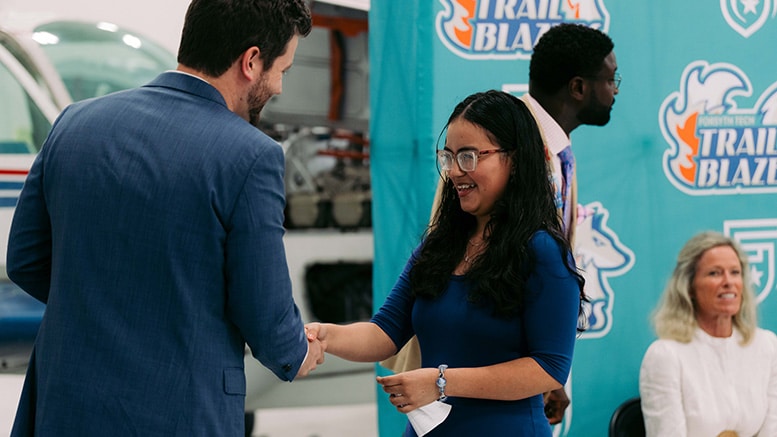
In February, the North Carolina college received a Bellwether Award in the instructional programs and services category for College Lift, an initiative providing academic assistance and out-of-class supports to students and their families beginning in middle school.
True to its name, College Lift prepares students for college, then guides them through everyday challenges once they enroll. Participants dedicate 21 Saturdays each year to structured instruction in core subjects, along with public speaking, creative writing and college readiness. Families are encouraged to attend these sessions, gaining financial and digital literacy skills to help their loved ones navigate college pathways.
Consistent with the award’s emphasis on scalable, replicable programs, College Lift is modeled after the University of Southern California’s Neighborhood Academic Initiative, which boasts a 99% college matriculation rate over its 30-year existence.
College Lift has expanded from one middle school to four since its 2017 launch, and now serves over 300 students in the Winston-Salem/Forsyth County School District. The Bellwether Award both highlights this achievement and emphasizes Forsyth’s distaste for established norms, Spriggs says.
“Getting this award is an acknowledgement of that innovative work – what we call ‘imagining without boundaries,’” she says. “My faculty and staff work every day to serve student success. Where are the places we can impact that success and economic mobility?”
Promoting best practices
The Bellwether Award is often compared to college football’s Heisman Trophy, as winners are selected and judged by fellow leaders and administrators. Awards are given annually to 10 colleges in each of three categories – instructional programs and services; planning, governance and finance; and workforce development. Thirty Bellwether contenders present their programs in a final round of competition, with winners evaluated on evidence-based outcomes. In short, programs in the running must be established and demonstrate a proven history of student success.
“Replicable and scalable” have remained core pillars of the award since its formation in 1995, says Rose Martinez, director of the Bellwether College Consortium, the national think tank that sponsors the competition.
“The heart of the mission is to promote effective best practices and guide their dissemination across schools,” she says. “We support peer learning at the community college level, which is not something that always happens (in the sector).”
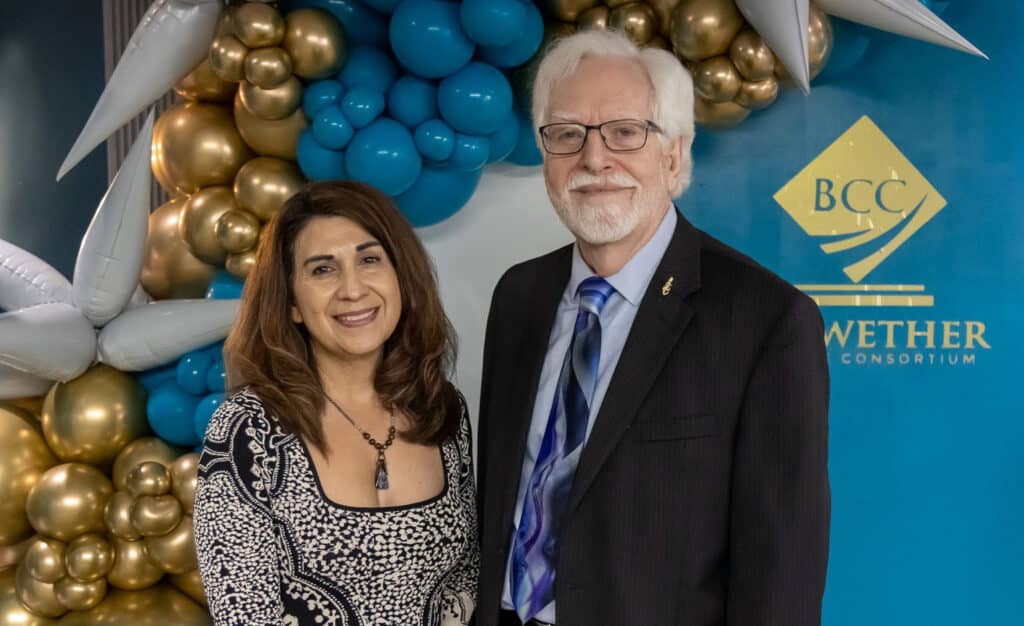
Held each February, the Bellwether competition sparks a culture of peer-to-peer learning that continues long after the winners are named. Beyond networking with finalists, administrators are given digital access to competing programs – documents they can use as a “roadmap” for their own development efforts, Martinez says.
The consortium also hosts a webinar series featuring winning colleges, which serves as another source of information for peer institutions.
“These are the people on the ground, talking to students and living the life,” Martinez says. “Again, it’s important that community colleges are doing well nationwide. They are the ones doing this cutting-edge work.”
Showing results
Forsyth Tech created its College Lift initiative to address low college matriculation rates among high school students in Winston-Salem. According to the myFutureNC nonprofit, only a quarter of ninth graders in the region are expected to earn a postsecondary degree — a challenge that Spriggs says necessitated a community-wide response. College Lift represents a long-term commitment as well, devoting seven years to students and their families.
The recent Bellwether Award cemented Forsyth Tech as a crucible for student success, while highlighting College Lift as a model for transformative outcomes, Spriggs says.
“This program has been impactful in creating brighter futures for our students while ensuring economic mobility for the community,” she says. “We have a highly educated workforce that’s being prepared for the future, and the Bellwether Award is our affirmation. We’ve been doing something that’s not been done anywhere else, and we’re challenging the status quo.”
Programs earn the Bellwether Award by proving measurable success and financial sustainability. The Hudson Scholars program at New Jersey’s Hudson County Community College (HCCC) did just that in 2024 to win the Bellwether Legacy Award, the highest honor given by the consortium.
Developed under the leadership of HCCC President Christopher Reber, Hudson Scholars engages underserved students through financial stipends, high-impact educational experiences and early academic intervention. The program has reached more than 5,000 students to date, exemplified by a ten-fold increase among HCCC students receiving “intensive support” from a counselor in the last four years, officials note.
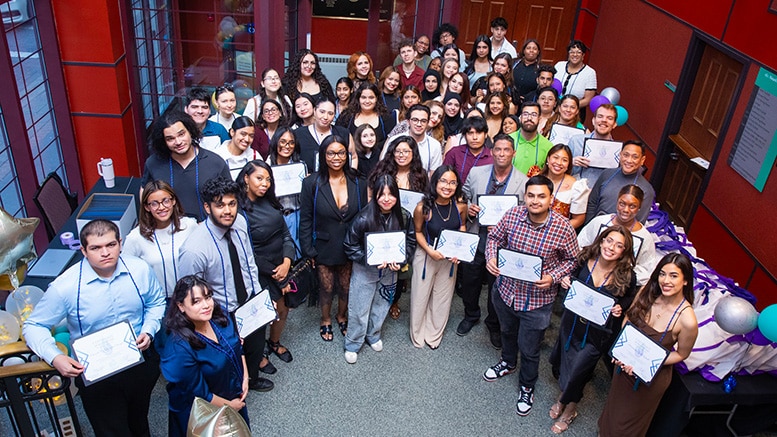
What’s more, active Scholars earned a two-year credential at three times the rate of non-participating students. With HCCC serving one of the most diverse communities in the U.S. – about 88% of enrollees identify as non-White – the Hudson Scholars model has proven a true game-changer, says Associate Dean of Advisement Gretchen Schulthes.
“This effort is setting the tone for what’s working and what can be replicated at other colleges,” she says.
‘Success begets more success’
Dale Campbell founded the Bellwether Awards to help identify critical issues facing community colleges at the time. The competition has addressed those problems with scalable solutions that might have otherwise gone unrecognized.
“These programs were hidden gems in many ways, because their stories weren’t being told, especially at smaller colleges,” Campbell says. “The community colleges that were getting recognized often had PR offices and a large amount of resources.”
Any initiative worthy of a Bellwether still must provide data to substantiate success. For example, HCCC demonstrated that the cost of Hudson Scholars was covered by the increased net revenue from higher student persistence, making the model financially viable for replication.
“Even if you have limited resources, but have this great idea, you still need data to determine if your program works,” Campbell says. “There’s no need to reinvent the wheel. Let’s invest resources in what’s proven to work.”
For Bellwether recipients, the award has been a springboard for additional recognition and funding. HCCC’s Reber attributes the college’s subsequent national awards for student success to the exposure gained from the Bellwether.
“Success begets more success,” Reber says. “Winning the Bellwether brought national visibility to the program, which led to other schools asking to share more information about our work. We were able to show empirical outcomes driven by data, as opposed to just having a program that sounds good. We’ve demonstrated excellence very specifically through data and measured outcomes.”
Spriggs of Forsyth Tech hopes that imitation continues to be the sincerest form of flattery, at least when it comes to sharing the college’s triumphs.
“We want to share great things that are working, especially when we find something as innovative and impactful as College Lift,” she says. “Sharing this work is so important because the goals of community colleges are the same. We are in the business of hope and opportunity, and providing pathways that will help students create a better life. That mission is the same for all of us.”