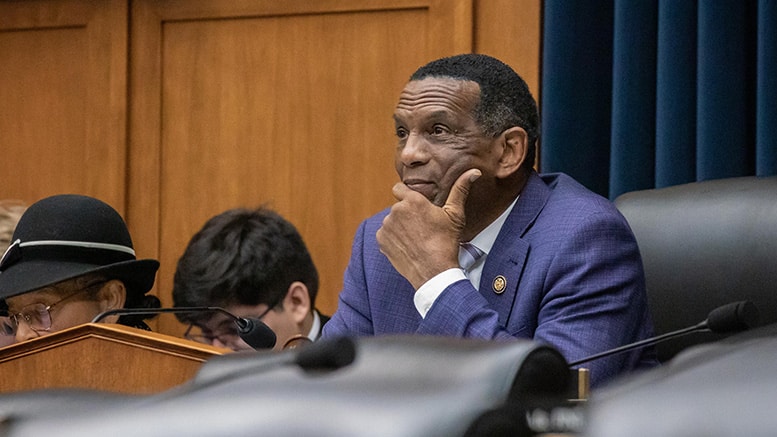
The growing use of learning and employment records (LERs) — comprehensive, digital records of credentials, skills and employment history — was the focus of Wednesday’s hearing of the House Subcommittee on Higher Education and Workforce Development.
“A paper certificate can hang on a wall; a digital certificate can populate a job application, unlock a learning pathway or be discovered by an employer searching for specific skills,” Credential Engine CEO Scott Cheney said at the hearing.
They can particularly benefit people with work experience or skills training but no degree, said Greg DiDonato, EBSCOed’s vice president of business development. “With effective LERs, these individuals can demonstrate the skills they already have, even without completing a degree.”
LERs also have gained bipartisan support. According to the subcommittee chair, Rep. Burgess Owens (R-Utah), use of LERs is the future, particularly as employers move toward more skills-based hiring.
“LERs will bring greater clarity to both sides of the labor market, helping workers identify opportunities and employers find the right talent,” he said.
Rep. Alma Adams (D-North Carolina) added that LERs have the “potential to make our economy more efficient, more equitable and more productive.”
Current successes
The Alabama Talent Triad, launched in 2024, is a statewide talent marketplace – of which LERs are a vital piece. The initiative is connecting both the supply and demand sides of the labor market, DiDonato said.
In just 14 months, nearly 132,000 workers have demonstrated their capabilities and skills through LERs. Users can store and showcase their verified credentials, education and work experience in a digital wallet on the Alabama Talent Triad website.
Employers, from small businesses to big manufacturing companies, are using the system to find talent. Education providers also are participating: nearly 19,000 education programs, credentials and work-based learning opportunities submitted to the credential registry, and 1,628 credentials have been evaluated and met Alabama’s compendium of valuable credentials review process.
“Unified talent marketplaces and LERs work for all Americans,” DiDonato said.
Outside of Alabama, people can create an LER through EBSCOed’s free site, LER.me.
Western Governors University (WGU) has an LER platform available to all students, alumni and employees. Individuals have agency over their records and are empowered to take a more active role in navigating their careers, according to WGU President Scott Pulsipher.
Challenges and recommendations
The growth of LERs comes with concerns and challenges, too, as voiced by committee members and witnesses. Among the questions: How can LERs be accessible to everyone? What happens if someone moves states? How can more individuals and employers be convinced to use digital records?
“LERs can level the proverbial data playing field,” Cheney said, but they only matter if people can use them. He noted the importance of ensuring that the value of skills and LERs reach everyone equally – learners, jobseekers and employers and, importantly, people of all education and income levels.
Cheney also stressed the importance of common data standards that are linked, open, interoperable and transparent so credentials and skills can be actionable across different platforms and states. To do this, he said, Congress should “require federally funded education and workforce programs to operate within talent marketplaces, and leverage common data standards that enable seamless verification and portability of credentials.”
Similarly, Alex Kaplan, an advisor at the American Association of College Registrars and Admission Officers, emphasized that interoperability is a “non-negotiable.”
“People move,” he said, but there needs to be assurances that a credential that’s issued in Alabama is accepted by an academic institution or employer in California.
“For LERs to reach their potential, they must work seamlessly across different systems, platforms and organizational boundaries,” Kaplan said.
Privacy concerns
The other non-negotiable is data privacy. LERs empower individuals to control their own records and data and they should be able to maintain that sovereignty, Kaplan said.
Of course, getting buy-in is paramount to scaling LERs. DiDonato said messaging is very important. Talent marketplaces mean different things to different people, so he suggested using specific, clear messaging for each type of LER user.
Despite the challenges, Adams noted that, if implemented correctly, scaling LER use and access “could uplift marginalized populations.”