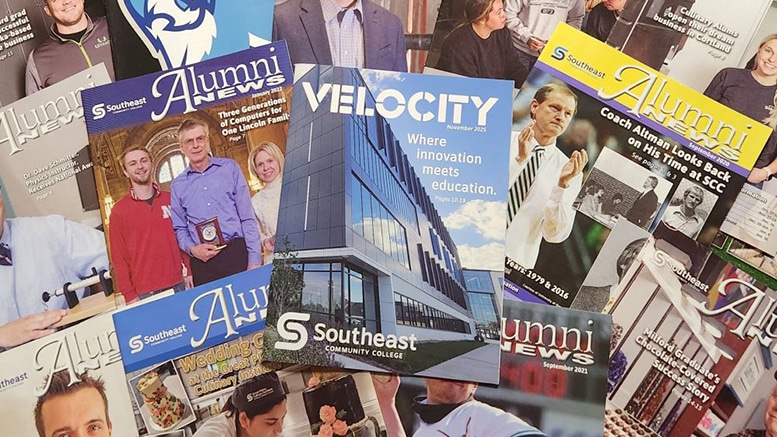
When Southeast Community College in Nebraska decided to rethink its alumni publication, the marketing and communications team didn’t start with a design concept or a new name. They started with a question: “What do our alumni actually want?”
SCC’s original magazine, “Alumni News,” published three times a year for approximately 50,000 recipients. When the college hired a new director of marketing and communications, he saw the magazine as an opportunity to elevate the brand. The team paused production for nearly a year and surveyed thousands of alumni. Their answers shaped everything from the new magazine’s content to its cover stock.
Here’s what they learned.
This article is part of a monthly series provided by the National Council for Marketing & Public Relations, an affiliated council of the American Association of Community Colleges.
1. Alumni want to know what’s happening now.
The clearest finding from SCC’s research: Alumni were less interested in looking backward and more interested in what’s happening on campus today. They wanted stories about current programs, students, faculty and facilities, with some alumni stories sprinkled in.
This drove a fundamental shift in editorial focus, starting with the magazine’s name. “Alumni News” became “Velocity,” reflecting the college’s momentum toward excellence and innovation. The new magazine also expanded into a campus-wide showcase piece for alumni, donors and community partners.
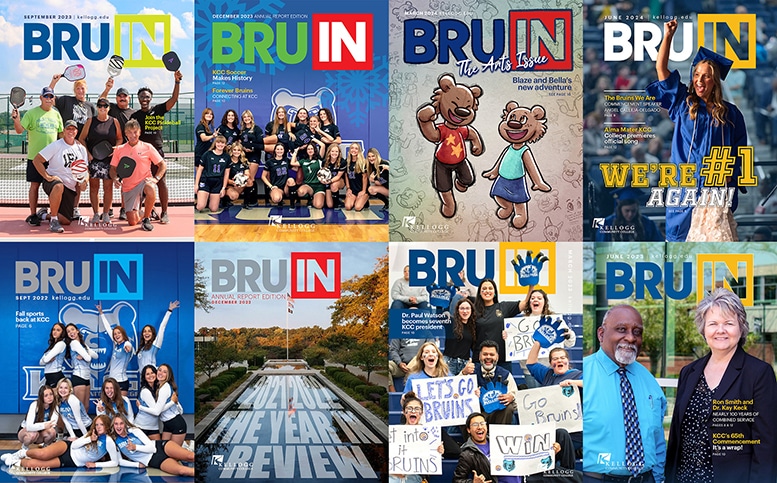
Kellogg Community College (KCC) in Michigan also uses its magazine, the quarterly “BruIN,” to provide readers with a big-picture view of campus. In recent years, the content has evolved from an eclectic mix of whatever content was on hand to something more structured and deliberate, said Simon Thalmann, KCC’s director of marketing.
“It’s a great way to highlight new and ongoing events, activities and initiatives in a more prestige package,” he said.
2. Fewer, better issues beat more, mediocre ones.
Because SCC’s survey showed that alumni showed no strong preference for frequency, the college made a deliberate choice: Do it right rather than do it often. Velocity grew from 20 pages to 32, printed on heavier stock with a premium cover finish, and dropped from three issues per year to two.
The trade-off between quality and frequency is worth an honest conversation within the marketing staff before any redesign begins. For SCC, this shift elevated its brand and made Velocitya showcase piece worth the investment.
3. Rethink the fundraising ask.
In Alumni News, the SCC Foundation received a regular spread, which it considered its most effective fundraising tool. Alumni research, however, told a different story: Readers didn’t like being directly solicited. Rather than eliminating the foundation’s presence, fundraising opportunities are now woven organically into stories rather than presented as hard asks.
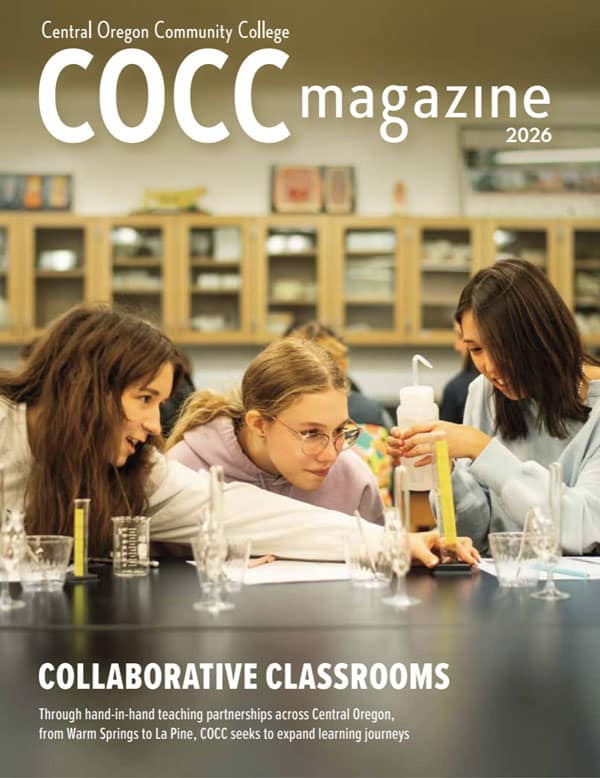
Central Oregon Community College takes a similar approach by separating the two missions into two publications.
“‘COCC Magazine’ highlights information about the college, innovative programs, news, students and alumni,” said Aimee Metcalf, COCC’s assistant director of marketing and public relations. “‘Legacies’ is produced annually by the foundation and includes an annual report woven into each issue.”
4. Expect internal resistance — and plan for it.
When SCC expanded Velocity to a campus-wide publication, the alumni office pushed back, feeling it was losing editorial control. The mar-com team moved forward based on its research, however, and the elevated final product won the alumni office over. As Velocity has been gradually moving to themed issues, story selection is more mindful and deliberate than it was in the magazine’s previous iteration.
Change management is part of the process. Bringing stakeholders along early and letting the finished product speak for itself can turn internal skeptics into some of a publication’s biggest advocates.
5. A great magazine becomes a tool beyond the mailbox.
Since the first issue of Velocity in November 2024, the response has exceeded expectations. SCC’s president carries copies to meetings with prospective community partners and donors, and he uses the magazine as a tangible representation of the college’s direction and quality. Which is proof that a thoughtful publication can do far more than fill a mailbox.