
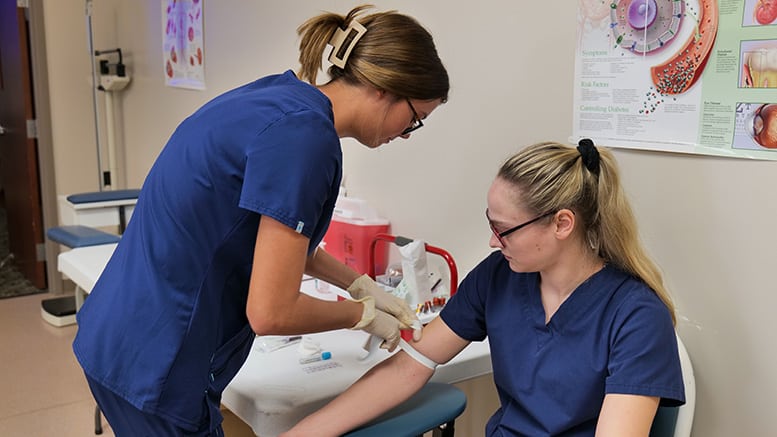
Two community colleges last month became the first two institutions to receive Education Department (ED) approval to use Workforce Pell grants for qualifying short-term programs. The next step for the colleges is to set up the programs and get the word out.
Officials at Iowa Central Community College, the first to get federal eligibility, hope Workforce Pell will open its longstanding emergency medical technical (EMT) program, which was already “busting at the seams,” to even more students, said Stacy Mentzer, the college’s vice president of instruction.
“My hope is that it will continue to grow. We’re going to offer it more broadly,” she said. “We’re very rural. We are surrounded by small communities that have volunteer fire departments and emergency medical personnel. What we wanted to do was make the training more available to the small communities in our area.”
And becoming Pell-eligible “makes a big difference for a lot of families,” she added.
Promoting the program
As of early September, Iowa Central was reaching out to employer partners such as emergency services departments and a regional hospital, as well as high schools to gauge interest among juniors and seniors to whom the school can send information, Mentzer said.
“We’re waiting for the advertising to get out there. We’ve got social media posts about it. … Our website is really busy,” she said.
The EMT program has been running for a while, so the college already has established instructors and curriculum, but Iowa Central’s financial aid department needed to get up to speed on helping new applicants fill out the Free Application for Federal Student Aid and answer their questions, Mentzer said.
“We’ve got everything we need for the program to be successful,” she said. “We’re just continuing to have those conversations and making sure the information is out there and available.”
Mulling other programs
Iowa Central is considering other healthcare programs such as phlebotomy and certified nursing assistant as well as potentially a course track for heavy equipment operators, Mentzer said.
“We’re just trying to meet the demands of our region,” she said, adding that she expects Pell-aided enrollment in the EMT program to be online by December or January. “The key is making it easier for people. I think we will see a boost in our enrollment just because of the fact that it is financial aid-eligible now. It’s more affordable.”
Connecting with employers, workforce boards
Indiana’s Ivy Tech Community College, the second school with an ED-approved program, has been making regional presentations to workforce boards and other intermediaries as well as employer organizations, such as state and local chambers of commerce, to help them understand how Workforce Pell will work — both generally and specifically to the college’s short-term certified clinical medical assistant (CMA) program, which will serve as a pilot for its Workforce Pell efforts, said Molly Dodge, the college’s senior vice president of workforce and careers.
“When I think about success in Workforce Pell, it’s having that deep employer engagement, and the ability for employers to come to Ivy Tech and say, ‘We have X number of job openings in this occupation that we think aligns with short-term training … and could we launch a program together?’” she said.
Selecting the CMA program
The CMA course topped the list of programs that the college thought would be eligible based on meeting all of the federal requirements, including being in place for at least a year, said Colby Shank, vice president of financial aid and student accounts.
“That was our focus for the pilot, to get something off the ground quickly,” he said. “Financial aid, the workforce team, and the provost’s office all contributed to helping us identify a potentially good first program. That work is going to continue, but this is our starting point.”
The 19-campus, statewide community college focused on CMA based on the knowledge that there are 500 job openings per day in that field statewide, Dodge said.
“It’s a pain point — a hard-to-fill job,” she said. “There’s also student interest in this career. The goal was to launch a pilot where we could see all of those pieces work together.”
Shank added that finding those synergies is important not only for students and employers in general but also to meet the accountability measures the program requires.
Gauging where to launch, student aid systems
As of early September, Ivy Tech hadn’t yet started student outreach, Shank said, pending conversations about which of its campuses are best candidates for the pilot.
“We’re working with them to identify if they are offering this, if this is something they would be able to participate in, if they have existing employer partnerships that would be a good fit,” he said. “That process is ongoing.”
Another piece of the puzzle is figuring out how to administer the financial aid for the new program, which will require scaling Pell Grant administration, Shank said.
“We are [currently] able to do anything with a Pell Grant on a small scale and manually,” he said. “Looking to the future, we want to make sure Workforce Pell isn’t just a niche program, that it’s something we can scale over time.”
As a large statewide system, that will require more automated processes, Shank added, and as the second program in the nation to get approval, Ivy Tech is finding that financial aid software vendors have work to do on their end to prepare for it.
“We are confident we will get the program running once campuses are ready for it,” he said.
Aiming for October, maybe spring
The earliest the Workforce Pell program could start for the CMA course track would be Ivy Tech’s second eight-week fall start date in October, Shank said, and it might not be until early next year, given the number of factors to still address.
“It may be a slow start, but I think it’s slow so we can go fast” once it’s up and running, Dodge added. “Our diligence here will pay off in terms of offering a quality pathway so that we can then advocate for more programs like this, in support of workforce needs across the nation.”