Several large-scale, workforce-focused projects led by or involving community colleges have received word over the past week of major federal investments. Most of the funding comes from the U.S. Commerce Department and the National Science Foundation.
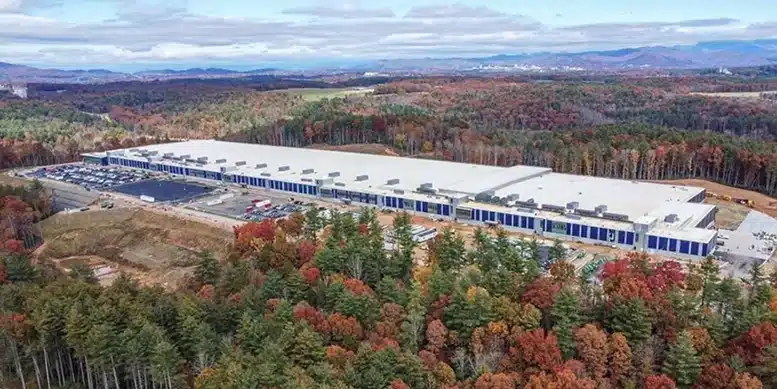
In North Carolina, Asheville-Buncombe Technical Community College (A-B Tech) will receive $29.2 million from the U.S. Economic Development Administration, which is part of the Commerce Department, to help with Hurricane Helene recovery and expand workforce training and economic opportunity in the area. A-B Tech and Buncombe County, with help from the Land of Sky Regional Council, teamed to apply for the grant to create an education, workforce training and research hub. The partners have eyed a Pratt & Whitney facility that could house the Western North Carolina Futures Factory, which by 2035 would train 800 workers annually, create 2,747 jobs, and produce $189 million in labor income for the region, according to officials.
“In the same way tobacco fields were once converted into what we now know as the Research Triangle Park, this marks the beginning of an education, training and research collaboration that will transform this site into an innovation hub for western North Carolina,” A-B Tech President John Gossett said in a release.
A-B Tech will serve as the on-site provider of education and training, with six partnering universities with engineering programs conducting research and development. Other community colleges in the region also will have access to training and research, including Blue Ridge Community College, Haywood Community College, Isothermal Community College and McDowell Technical Community College.
“We envision a talent pipeline with A-B Tech delivering on-site education and training with stackable credentials through the North Carolina Community College System, a technology testbed with shared R&D from our university partners and national institutes, and industry engagement with direct support for our manufacturers through opportunities to build efficiencies, supply chain resilience and diversification,” Gossett said.
Infusion from NSF
Several community colleges also announced over the past week that they will receive new grants from the National Science Foundation (NSF), with a partnership in Ohio landing a huge grant to spur advanced manufacturing, technology and workforce innovation. Lorain County Community College (LCCC) will lead workforce training for an NSF Regional Innovation Engine project that will bring up to $160 million in federal funding to the region.
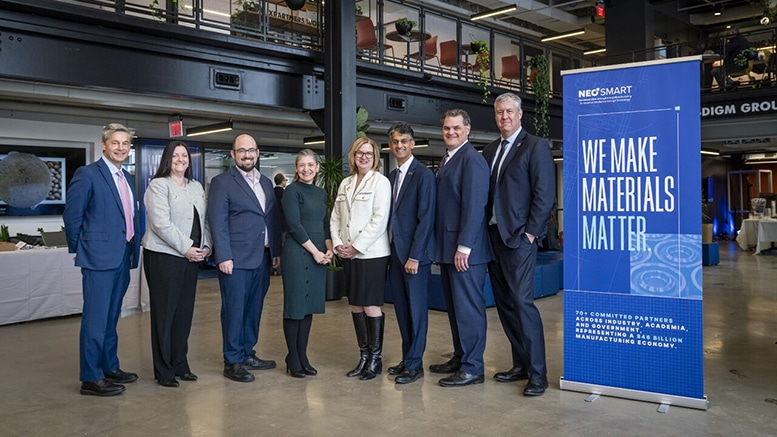
The funding goes to NEO-SMART (Northeast Ohio Strengthening Manufacturing for American Resilience through Technology), a collaboration of more than 70 partners comprising private industry, civic and philanthropic organizations, higher education, and state and local government. LCCC is a founding member, and LCCC President Marcia J. Ballinger serves on the NEO-SMART governing board.
The award means NEO-SMART can receive up to $160 million over 10 years: $7.5 million in each of the first two years, $15 million annually for the following three years and $20 million for each of the final five years as milestones are met, according to a release.
Through stronger partnerships among higher education, industry and government, the initiative plans to prepare 12,000 workers for high-demand careers, expand research and entrepreneurship, and help bring new technologies from the lab to the marketplace. The work builds on efforts already underway at LCCC, where workforce development is driven by collaboration with more than 700 employer partners, the college says. To meet growing demand, LCCC has expanded its offerings to include applied bachelor’s degrees in microelectronic manufacturing and smart industrial automated systems engineering technology, as well as an associate degree and certificates in multicraft industrial maintenance.
“The NSF Engine allows us to take proven models and scale them,” Ballinger said. “Community colleges are uniquely positioned to respond to industry needs, remove barriers to education and connect more learners with high-quality careers. This investment accelerates work that is already transforming lives and strengthening regional competitiveness.”
Other NSF Engine grant awards
In Rochester, New York, the NSF STELLAR Engine — which includes Monroe Community College (MCC) among its partners — has received a two-year, $15 million grant, with a $16 million state match over six years. STELLAR (Science, Technology and Engineering for Laser and Laser Applications Research) will establish a competitive technology and innovation cluster focused on laser technologies, education, business expansion and attraction, manufacturing and workforce development. MCC established the nation’s first community college optical systems technology program and is a national leader in helping establish optics programs at other public two-year colleges, including Corning Community College.
“This NSF investment will expand opportunities for students, strengthen career pathways, and help ensure that employers across our region and nation have the talented technicians needed to drive the next generation of discovery, manufacturing and economic growth,” said MCC President DeAnna Burt-Nanna.
Community colleges have a role among other NSF Engine grant awards: Connecticut State Community College is a partner in a project focused on quantum technologies. Southeast Community College and Des Moines Area Community College are part of RuralSTAMINA – Ascending Rural communities through Sustainable, Transformative, Advanced Manufacturing INnovations and Alliances – which will focus of innovations in biomass conversion and biomanufacturing. Both projects will received $15 million each over two years.
Creating pathways
In Alabama, Drake State Community & Technical College, Trenholm State Community College and Lawson State Community College are partnering on a $500,000 NSF grant project to broaden participation in STEM education. The colleges will work together to identify strategies that expand access to STEM education and prepare students for emerging opportunities in the semiconductor and advanced technology sectors.
The project will create new pathways for student engagement, exploration and career development in STEM while strengthening institutional capacity to support workforce needs in one of the nation’s fastest-growing industries.
“Through collaboration, innovation and a focus on student success, we are positioning our students to thrive in the high-demand careers that will shape the future economy,” said Drake State President Patricia Sims.
New York’s Bronx Community College (BCC) also has received a $500,000 NSF grant for a three-year project to enhance how students learn mathematics and biology, using project-based approaches that prepare them for college and the workforce. Students will participate in collaborative investigations of open-ended, real-world problems using authentic data, according to the college. The project will produce freely available, openly licensed teaching resources that educators across the country can adapt for their own classrooms.
“Our students are entering a workforce being reshaped by artificial intelligence,” said BCC President Larry D. Johnson, Jr. “By helping them connect classroom learning to real-world problems, we prepare them not just to pass a course, but to think, collaborate, lead and gain the skills employers value – the ones generative AI cannot easily replace.”
State supports
Several community colleges also have recently received large grants from states for their workforce development efforts. For example, Ulster County Community College last week was awarded a $620,054 state grant to expand workforce training opportunities that address critical local healthcare staffing needs.
The college plans to use the three-year grant to train approximately 150 individuals for in-demand allied health careers through industry-recognized certification programs. The program will include funds for student tuition, childcare assistance and other supports, according to the college.
Officials noted the project’s strong partnership, which includes local hospitals, healthcare providers and community organizations.
“By working closely with our healthcare partners, we will prepare residents for meaningful careers while helping local employers meet the growing demand for skilled healthcare professionals,” said SUNY Ulster President Alison Buckley. “At the same time, these short-term credentials create pathways for students to continue their education and advance into higher-level healthcare careers.”