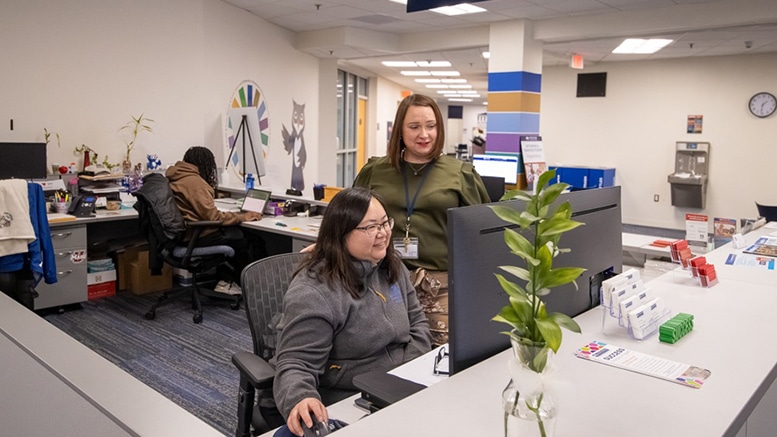
At Middlesex Community College in Massachusetts, conversations between faculty, staff and students look very different now. It’s not uncommon for instructors or support staff to describe for students how they fell behind academically themselves, had trouble making friends or otherwise struggled to find their own footing during college.
These personal stories of vulnerability are part of a strategic attempt to forge deeper connections with students, the kind that make students more likely to persist and complete a degree or certificate. And there’s evidence to suggest they’re working as intended: Fall-to-spring retention rates have risen by six percentage points across the institution since the practice began. Of the students who’ve participated directly in these “real talks” during the fall semester, nine out of 10 go on to enroll in the spring.
This article is an excerpt from the current issue of the Community College Journal, the bimonthly magazine of the American Association of Community Colleges.
“So many students just see the finished product” when they interact with their professors or support staff, says Dean of Enrollment Kayla Caron. Students often don’t see these accomplished professionals as flawed and relatable people with their own hurdles they’ve had to overcome on the path to success.
Giving students a glimpse behind the curtain helps them see the adults they encounter as trusted partners in their educational journey and changes these interactions “from transactional to transformational,” Caron notes.
New approaches
The “real talks” at Middlesex are an example of how community colleges nationwide are trying new techniques to boost retention. Hanging on to existing students once they register is a vital part of maintaining enrollment — and it’s less costly than recruiting new students. It’s also critical as state accountability systems factor completion rates into college funding formulas.
For years, community college administrators have focused on removing barriers to improve retention, such as a lack of time, money, transportation or childcare. While these are still important factors, campus leaders increasingly are recognizing that fostering a sense of belonging also is critical.
“We know how important a sense of belonging is to student retention,” says Dara Hagen, vice president of student affairs for Normandale Community College in Minnesota. When students feel connected to the college and each other, she notes, they’re more likely to persist.
Rethinking orientation
Normandale has strengthened this sense of connection in part by rethinking its approach to onboarding new students. New Student Enrollment Coordinator Tim Lapanne has seen a few different models for how Normandale approaches student orientation during his 10 years at the college. Before Covid, students would attend orientation in groups, with six to eight students per advisor. During the pandemic, the college stopped requiring orientation altogether, and many students chose not to participate. But this experience only reinforced the importance of the orientation process to students’ success.
With this lesson in mind, Lapanne and his colleagues set out to transform the onboarding process. Not only is orientation required for new students, but every student now has a one-on-one meeting with an advisor.
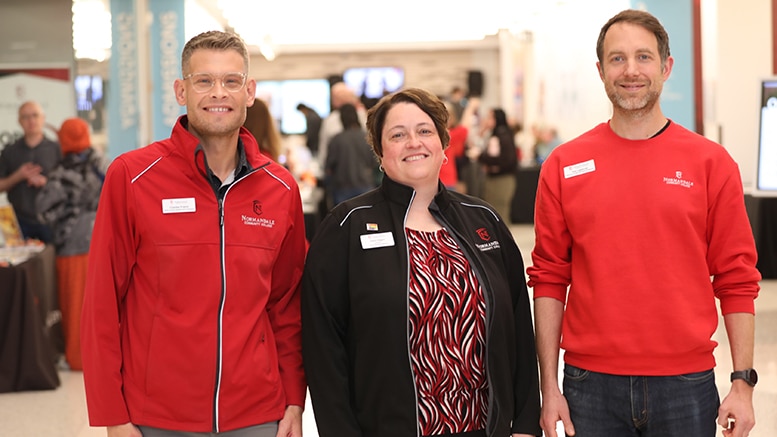
New students attend a 90-minute orientation session on campus. During this time, they learn about the various technologies the college uses, such as its learning management system. They get a lesson in effective time management. They talk about their program of study and what courses they should take to achieve their goals. And they discuss financial aid and other resources the college has to remove barriers to success.
For these orientation sessions, the college makes every effort to match new students with the person who will be their permanent advisor during their time at Normandale.
“That’s been very valuable, both for the advisor and for the student,” Lapanne says. “They can start building that relationship on day one.”
Looking at the numbers
This new one-on-one orientation model, which began with the fall 2025 semester, is obviously more labor-intensive. To make it work, the college has focused on using advisors’ time in ways that would achieve the biggest impact. Officials have found that prioritizing this proactive, up-front approach has reduced the need for advising sessions throughout the semester. While there has been a 32% increase in advising sessions overall, there have been 15% fewer same-day emergency sessions.
Still, the college has had to hire more advisors to handle the logistics, nearly doubling its total. Some of this increase was paid for with grant funding, and much of it was funded from the college’s operating budget.
“It wasn’t actually a hard sell,” Lapanne says. “We’ve always taken a student-first approach.”
The new onboarding model appears to be paying off. In its first year, the college saw an 8% increase in fall-to-spring retention, resulting in about 300 more full-time equivalent students for the spring 2026 semester.
“People are inherently messy and complex,” says Dean of Recruitment and Outreach Charles Frame. Implementing a highly personalized orientation process “allows us to dig into each student’s needs more effectively.”
Adds Hagen: “Our students talk about how they feel welcome and included at Normandale, and that starts with their onboarding.”