
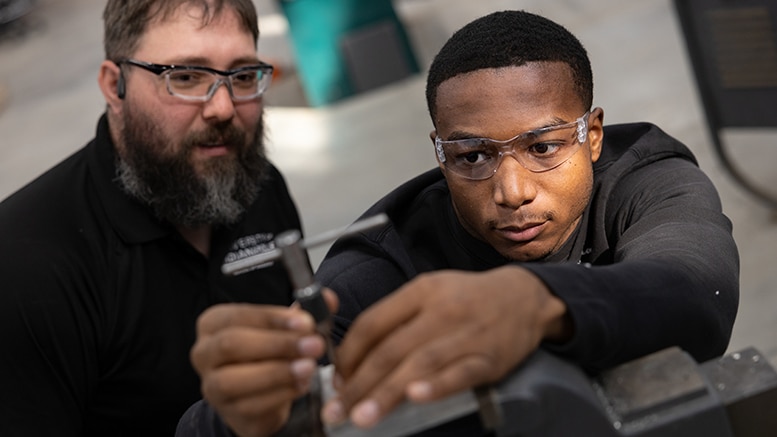
Work experience is a key factor for recent two- and four-year college graduates who successfully landed entry-level jobs — and they would like to see colleges create more hands-on learning opportunities to provide that pathway, according to findings from a new Cengage report.
Among employed graduates who held an internship, 81% said the opportunity helped them secure their jobs, and more than half (52%) say they helped a lot, according to the report. When asked to identify the biggest contributor to securing employment, graduates ranked internships or prior work experience first (24%), ahead of a college degree (14%). Nearly two-thirds (64%) of graduates who did not have an internship felt it negatively affected their employment.
In addition, 56% of graduates want colleges to provide more internships, co-ops and paid work experiences.
‘The new currency of employability’
The report describes experience as the “new currency of employability,” with many graduates saying employers expect more experience than an entry-level candidate should reasonably have. More than half of graduates (53%) said they chose not to apply for degree-related entry-level jobs because they felt underqualified. Among those graduates, nearly one-third cited a lack of work experience as the primary reason.
“With experience in the spotlight, internships, work-integrated learning, and employer partnerships have become essential bridges between education and employment,” the report says.
Many graduates appear willing to take whatever work they can find to gain a foothold, according to the findings. The report says 91% have felt pressure to accept any available job rather than wait for one that aligns with their education or career goals. Nearly half of graduates still seeking relevant employment said they would accept a “stepping stone” role to get started.
Mixed signals
Among employers, job-specific skills (41%) and work experience (22%) are top signals for entry-level evaluations. While only 16% say a college degree is important in those decisions, more than half (61%) of employers still require an associate or bachelor’s degree for those positions, with 52% saying degrees demonstrate professionalism and workplace readiness.
Still, the percentage of employers who say candidates with degrees are better equipped for entry-level positions has declined over the years. Just under one-third (31%) of employers said they are better equipped, compared to 34% in 2025 and 46% in 2024. Meanwhile, employers report that more entry-level candidates are entering the workforce with certifications or similar credentials rather than a traditional college degree — 52% this year, compared to 39% in 2023.
Researchers noted the misalignment between employers and entry-level employees, saying it’s a challenge that requires cooperation among all the participants.
“Graduates are being asked to enter the workforce with experience, job-specific skills and readiness from day one,” Cengage CEO Michael Hansen said in a release. “Rather than placing the responsibility on any one group to create career-ready workers, we have an opportunity for employers, educators and institutions to align around what career readiness requires and how each can contribute to helping graduates achieve it.”
The annual Cengage report on graduate employability is based on surveys administered this year to hiring managers, postsecondary instructors and more than 1,000 recent graduates with four-year degrees, two-year degree or credentials/certificates.