
Rising costs for food, housing, transportation and other necessities are making it harder for Latino students to stay enrolled and complete college, according to a new UnidosUS report. The organization says these challenges are particularly significant at community colleges, which serve large numbers of Latino, low-income and first-generation students.
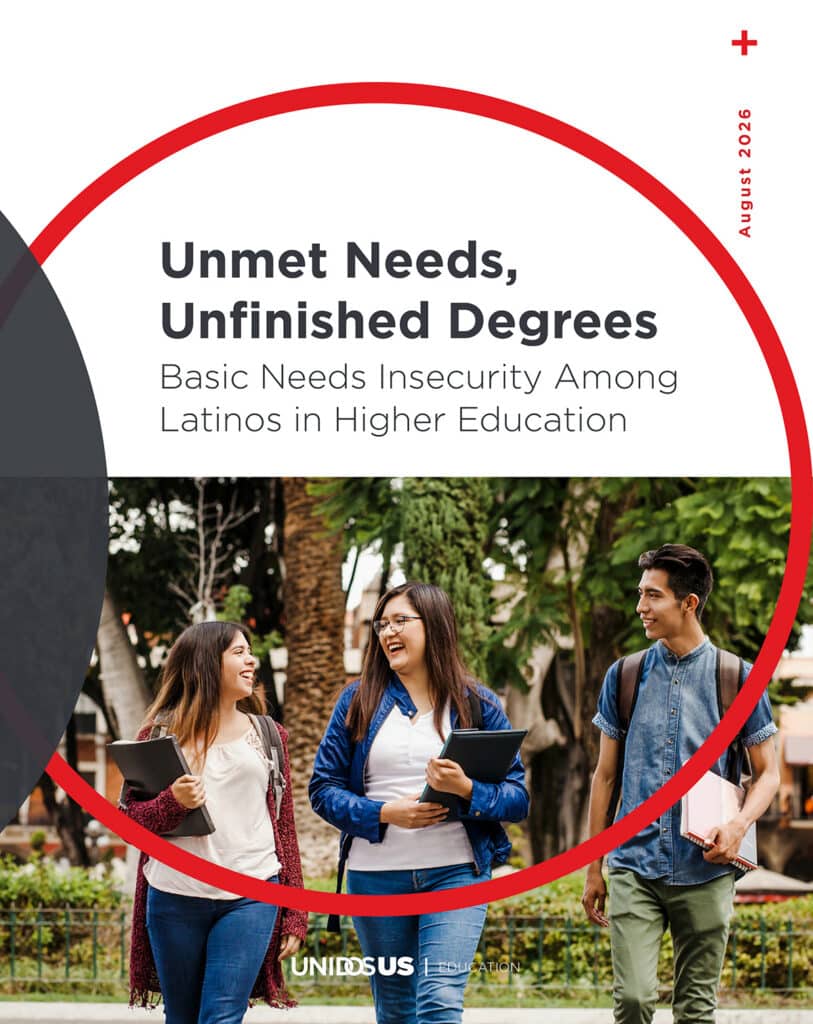
The report highlights a growing completion gap despite strong demand for higher education among Latino students. Some 3.9 million Latino students are enrolled in postsecondary education, comprising one in five college students nationwide. Yet Latino degree-completion trails their White peers by 18.5 percentage points — often a result of various challenges. In a previous UnidosUS survey, two-thirds of Latino students said they had considered leaving college, while mental health concerns, food insecurity and financial pressures ranked among the top barriers to persistence.
Focus groups conducted for the report found that students often face overlapping challenges. Community college participants described having to choose between paying for food, transportation and school expenses, with each financial strain affecting academic performance and enrollment decisions.
Researchers also found that family caregiving responsibilities, mental health stress and transportation barriers can compound students’ difficulties. Many Latino students commute, work while enrolled and contribute financially to their families, creating pressures that institutions often fail to recognize or address.
In addition, the report observed that federal policy — from reducing and redirecting funding for programs designed to help Latino populations, to DEI rollbacks and immigration enforcement — also affects Latino student enrollment and completion.
Promising practices
The report points to basic-needs centers and wraparound support programs as promising solutions. It cites evidence that comprehensive student-support initiatives, including food assistance, emergency aid and resource navigators, can improve retention and completion rates.
UnidosUS recommends that colleges invest in one-stop basic-needs centers, expanded mental health services, transportation assistance and culturally responsive student supports. It also calls on federal and state policymakers to strengthen financial aid and public-benefit programs that help students meet essential needs as they pursue a degree.
The report highlights examples of the work community colleges are doing in these areas. Amarillo College is cited as a leading example of a comprehensive anti-poverty strategy that addresses food, housing, transportation and other basic needs. The Texas college implemented a broad initiative that included a basic needs center designed to connect students with support services, according to the report. This approach “nearly doubled three-year completion rates for first-time students,” it said.
Normandale Community College was noted as an example of how dedicated funding can help colleges coordinate support and improve student outcomes. The Minnesota college received a federal Basic Needs for Postsecondary Students grant to build institutional capacity and train staff focused on student outreach and basic-needs support. The report said that students served through the grant had a completion rate 6 percentage points higher than students who were not served.
Rio Hondo College is highlighted for tackling transportation barriers. A study cited in the report found that providing discounted transit benefits increased student persistence. The California college is an example of how relatively targeted interventions can help students stay enrolled, particularly commuter students who face transportation costs and access challenges.