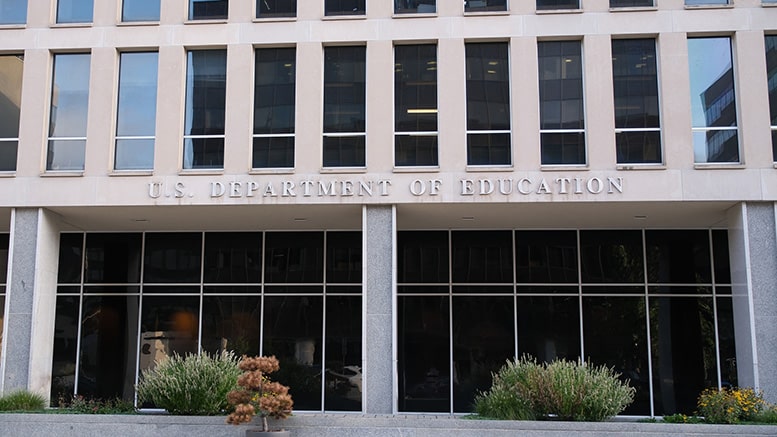
The U.S. Education Department (ED) on Monday released final regulations that establish a new accountability regime based on program completers’ earnings. The regulations, based on provisions in last year’s One, Big, Beautiful Bill Act, take effect July 1.
The final regulations are very similar to the proposed regulations issued in April. Starting next year, undergraduate degree and certificate programs will be judged based on the earnings of their prior graduates. If the median earnings of program completers are below those of high school graduates ages 25-54 in the institution’s state for two of the past three years, the program is deemed a “low-earning outcome program.” Such programs lose eligibility for the Federal Direct Loan Program.
Potential consequences are not limited to loan eligibility in all cases. Under the proposed regulations, an institution may lose all Title IV eligibility – loans and grants – in low-earning outcome programs if more than 50% of its Title IV students or more than 50% of its Title IV funds go to such programs. However, the final rule allows an institution to avoid this outcome if it stops offering Federal Direct Loans in a program before it is deemed a low-earning outcome program.
This new provision will greatly limit, if not eliminate, the potential loss of Pell Grant eligibility for such programs if institutions continue to offer them. The so-called “50-50 Rule” was controversial, as many stakeholders, including the American Association of Community Colleges, said it overreaches ED’s statutory authority.
The final rule also delays the application of the earnings metric to programs that prepare students for occupations in which tips constitute a substantial portion of income. The rule is expected to be published in the Federal Register on Wednesday.