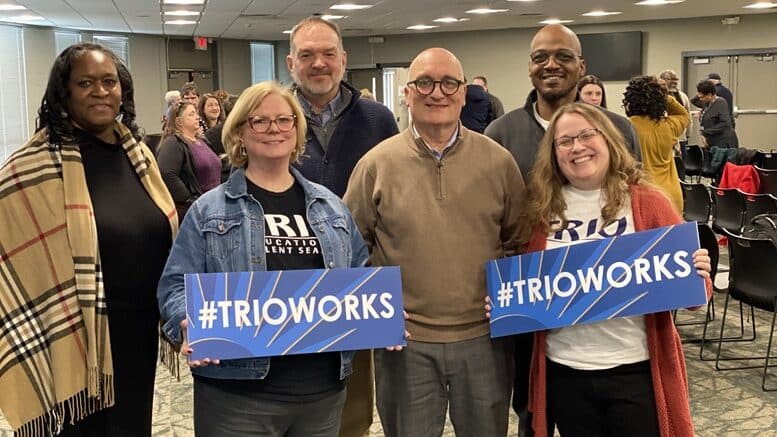
Bluegrass Community and Technical College (BCTC) in Kentucky has received a $1.7 million federal grant to continue its TRIO Educational Talent Search program. The five-year grant is from the U.S. Department of Education’s Office of Postsecondary Education.
BCTC’s Educational Talent Search program will serve 680 low-income and first-generation students across 18 middle and high schools in three local counties. The program is designed to help students overcome academic, financial and social barriers while building a pathway toward high school graduation, postsecondary enrollment and completion of a college degree, certificate or other credential.
The program has existed for more than 30 years at BCTC.
“Thousands of students have benefited from the guidance, encouragement and resources this program provides,” said BCTC Chancellor Greg Feeney. “Educational Talent Search is a powerful example of how sustained support can change the trajectory of a student’s life and, ultimately, strengthen families and communities across our region.”
Massachusetts
Bunker Hill Community College (BHCC) is celebrating the third year of a $150,000 grant from Liberty Mutual Foundation supporting its DISH Food Pantry, which provides food and other essential resources to students and their families.
Liberty Mutual has been a supporter of DISH since BHCC opened the pantry in 2019. The current three-year grant has helped DISH fill gaps in resources that may not be available through other sources, including culturally relevant and gluten-free foods, hygiene products, diapers and infant care items.
In 2025, the pantry distributed more than 131,000 pounds of food — an increase of more than 300% over five years — and served more than 1,000 households. Today, students can access resources through grocery pickup and automated food lockers, as well as programs such as a monthly diaper lottery.
Nebraska
Metropolitan Community College (MCC) is the recipient of a $60,000 grant from the Johnny Baxter Carriage House Foundation to expand MCC automotive, diesel and automotive collision technology programs. The grant will fund new equipment, including an industry-grade alignment machine that will allow MCC to offer additional automotive technology courses in Dodge County.
The college currently provides automotive technology programs during the day to dual-enrollment high school students at the Fremont High School Career and Technical Education Center and to the community in the evening. The expanded course offerings will give students additional opportunities to train for careers in automotive technology closer to home.
New York
LaGuardia Community College/CUNY will use a $500,000 federal grant to strengthen efforts to support students experiencing mental health and substance abuse issues.
The Substance Abuse and Mental Health Services Administration (SAMHSA), a branch of the U.S. Department of Health and Human Services, awarded the grant.
With the funds, the college will implement The LaGuardia CARE (Campus Action for Resilience & Engagement) Initiative, a comprehensive behavioral health capacity-building program to strengthen the college’s ability to identify, respond to and support students experiencing mental health and substance use concerns.
The initiative builds on the infrastructure and partnerships established through previous Garrett Lee Smith and Mental Health Awareness Training grants and aims to reduce suicide risk, promote student well-being and improve student success.
North Carolina
Alamance Community College (ACC) has received $474,878 from the National Science Foundation’s Advanced Technological Education (NSF-ATE) program to develop BioQuest, a new initiative to prepare students for careers in biopharma quality.
Through BioQuest, ACC’s biotechnology department will create a new associate degree in biopharma quality, with courses offered for the first time in fall 2027. The program responds to unmet demand for technicians skilled in quality control and quality assurance. These specialists help ensure that products meet company standards and U.S. Food and Drug Administration requirements.
The project team will develop six new courses for the degree, each shaped by the skills gaps identified by ACC’s Business Industry Leadership Team and delivered in a hybrid format.
* * *
Thanks in large part to a nearly $2.6 million grant from the U.S. Economic Development Administration (EDA), Southwestern Community College (SCC) will create a centralized space for its Small Business Center and workforce development.
The EDA grant is supported through disaster recovery funding. Hurricane Helene exposed training gaps throughout the region, and SCC has identified ways to address those gaps by expanding space to provide short-term, relevant training that is responsive to business needs.
Renovation of the workforce continuing education division’s space is expected to be completed by the summer of 2028.
The total project cost equates to about $3.2 million. As part of an 80/20 federal/local funding split, the project’s remaining budget will be covered by a local match from SCC’s institutional funds.
“As is the case at community colleges across the country, short-term workforce training is in high demand throughout our service area,” said SCC President Don Tomas. “This investment by the EDA will benefit not only our existing businesses but also thousands of workers and their families in the years to come.”
Rhode Island
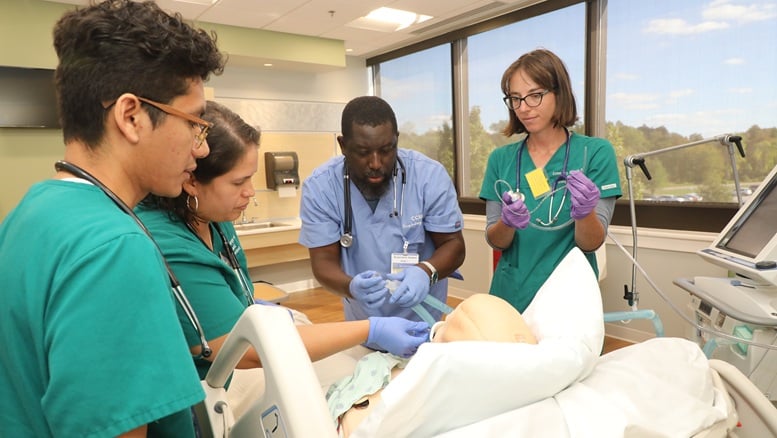
The Community College of Rhode Island (CCRI) will use a $1.54 million grant through the Rhode Island Department of Labor and Training to address the growing demand for qualified healthcare support professionals in the state’s rural communities.
The college will provide enhanced program capacity, improved training resources and retention-focused support for its students in 11 high-demand programs, including sonography, respiratory therapy, dental hygiene and radiography. These enhancements will help close workforce gaps that currently contribute to limited service availability, longer patient wait times and reduced access to necessary medical care.
“This funding allows CCRI to do what we do best — build direct, practical pathways from the classroom into the healthcare jobs our state needs filled right now,” said CCRI President Rosemary A. Costigan.
West Virginia
BridgeValley Community and Technical College and WVU Parkersburg have received nearly $2 million through the Appalachian Regional Commission’s (ARC) Partnerships for Opportunity and Workforce and Economic Revitalization (POWER) Initiative. The initiative aims to expand advanced manufacturing education and workforce development across 11 West Virginia counties.
BridgeValley will serve as the lead institution and federal grantee in partnership with WVU Parkersburg. Together, the colleges will establish a regional manufacturing corridor designed to strengthen advanced manufacturing education, expand career pathways, and support workforce and economic development across several counties.
“This investment represents an important opportunity to strengthen both our workforce and the communities we serve,” said BridgeValley President Chris Treadway.
Over the three-year project period, the initiative is expected to serve approximately 900 students and 100 incumbent workers while engaging at least 20 businesses, 10 high schools and 10 workforce development organizations throughout the region.