Many readers will remember the viral story from May 2025 in which a student parent at the University at Buffalo was pursued by campus security for carrying his infant across the graduation stage. The university did award the student his diploma, but the incident highlighted how rigid and exclusionary commencement traditions can be.

We take a much different approach at Oregon’s Linn-Benton Community College (LBCC), where I have served as president since 2020. LBCC serves all the communities of Linn and Benton counties, which have very different demographics, political perspectives and educational attainment levels. Yet residents across the region share a deep commitment to their community college.
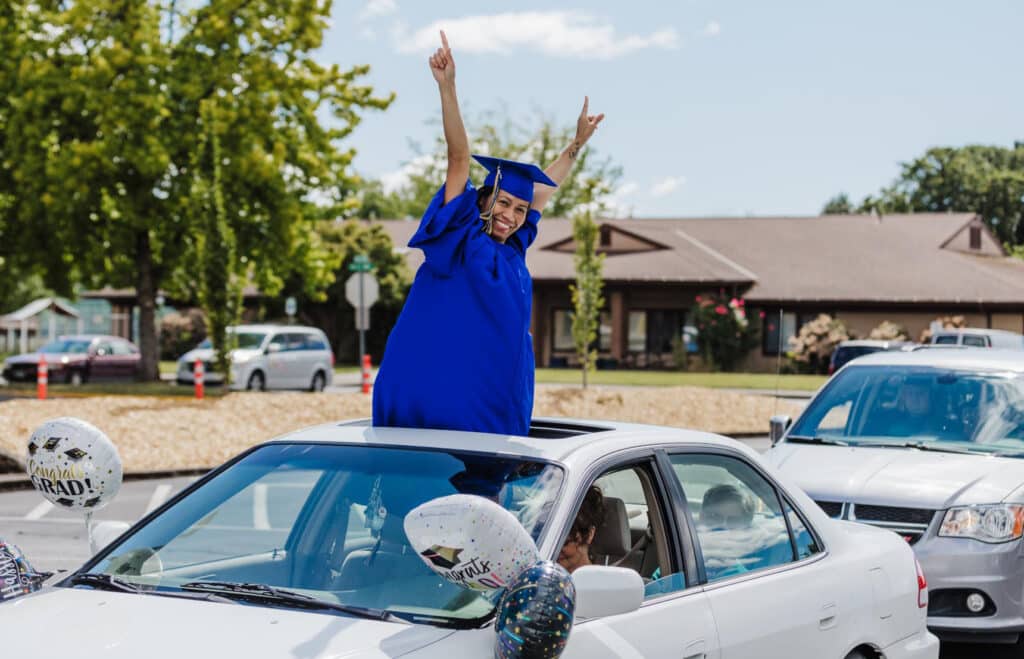
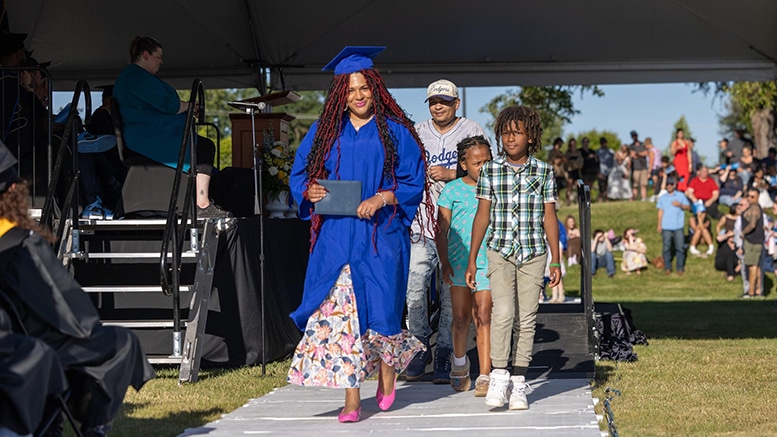
At LBCC, we have reimagined commencement around the people who help students reach graduation day, encouraging them to bring their family and supporters as they walk across the stage in the LBCC Family Walk (see video, below). This tradition took root at LBCC during Covid, when, like many institutions, LBCC replaced its traditional ceremony with a drive-through “CARmencement.” Students arrived in decorated vehicles, often dressed to reflect their programs of study. An agriculture graduate wore cowboy attire; an automotive student proudly drove a restored muscle car.
What stood out most, however, was not the vehicles; it was the people inside them.
Most students arrived surrounded by family members, friends and supporters. As faculty, staff and trustees handed out diplomas, we witnessed the broader impact of community college education. We celebrated graduates who arrived in a pickup truck packed with relatives, on a campus golf cart because they lacked transportation, or in a rented party van filled with family members dressed as nurses to honor a new nursing graduate.
Those moments revealed something traditional commencement ceremonies often miss: educational achievement is rarely an individual accomplishment.
When in-person ceremonies resumed, I asked Dean Leslie Hammond to help us preserve that spirit. Ever since, students have been able to include parents, children, spouses, grandparents, siblings, and other loved ones in their moment of recognition as part of the LBCC Family Walk. The response has been phenomenal.
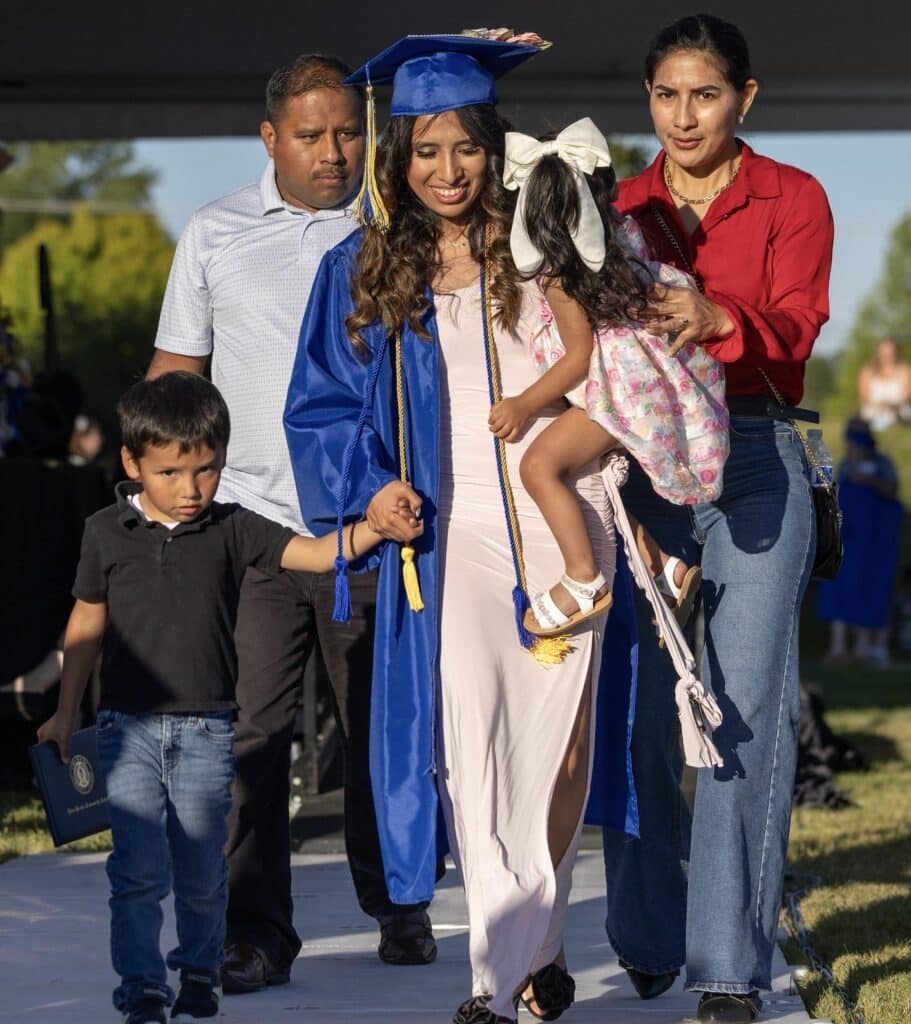
As president, it is my privilege to shake the hand of every graduate. Through the Family Walk, I have greeted graduates accompanied by one family member and others accompanied by a dozen. This year, more than half of our graduates chose to participate, with relatives ranging in age from one month to more than 85 years old.
Including families creates a longer and occasionally chaotic, ceremony. Trustees stay much later. Commencement marshals manage far larger groups. The logistics are undeniably more complicated.
Yet the reason we continue is simple. Our mission is not merely to award credentials; it is to create opportunity that extends across generations. The Family Walk reflects that open access mission in a visible and powerful way.
To my knowledge, LBCC is the only community college in the country that formally invites graduates and their families to receive recognition together. Rather than emphasizing individual achievement alone, we celebrate the network of support that made achievement possible.
That approach feels especially appropriate for community colleges. We serve everyone, from GED completers to aspiring engineers, welders, nurses, diesel mechanics and transfer students. Their paths differ, but each graduate arrives with people who helped them succeed.
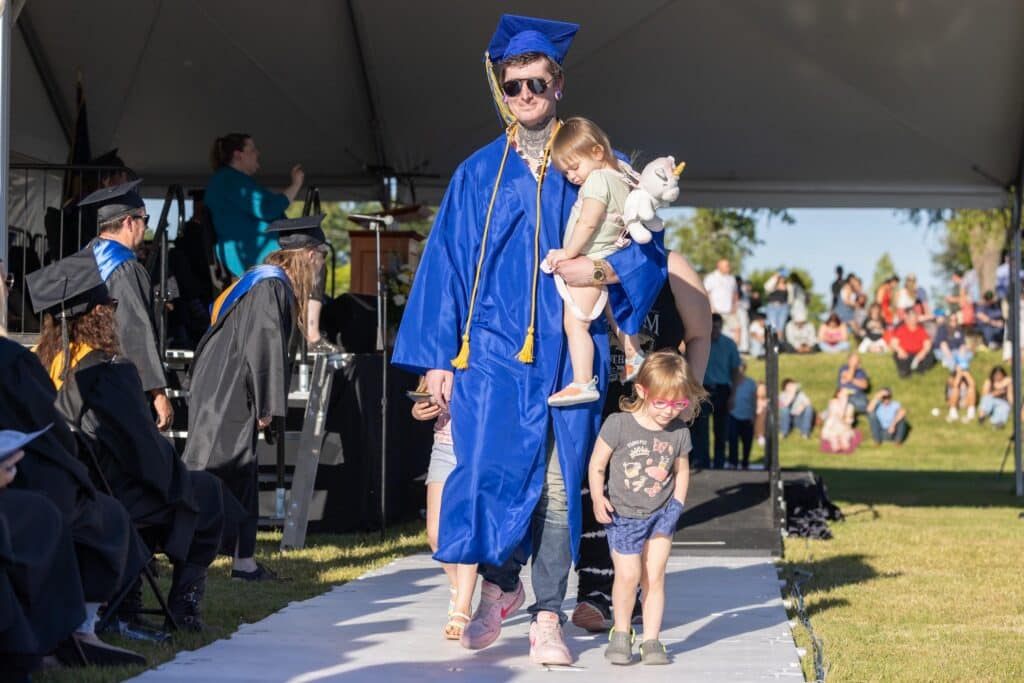
Nowhere is that more meaningful than with student parents.
When a mother walks across the stage holding a toddler’s hand or surrounded by her teenagers, she demonstrates that education is worth sacrifice and investment. She shows her children what persistence looks like and models a pathway they may someday follow themselves.
Last year, a father graduated wearing his chef’s uniform and crossed the stage with his three young children, all dressed in matching chef jackets. The image perfectly captured what commencement can represent: not simply personal accomplishment, but the example one generation sets for the next.
This spring, we lost Leslie Hammond, our dean who helped champion the Family Walk; she passed away far too young after a battle with cancer. In her honor, we renamed the tradition the Leslie Hammond Memorial Family Walk.
The tribute feels especially fitting because Leslie believed deeply in inclusion, belonging and the power of education to transform families. During the ceremony, we also pause to recognize loved ones who are no longer with us, but whose influence helped bring graduates to this moment.
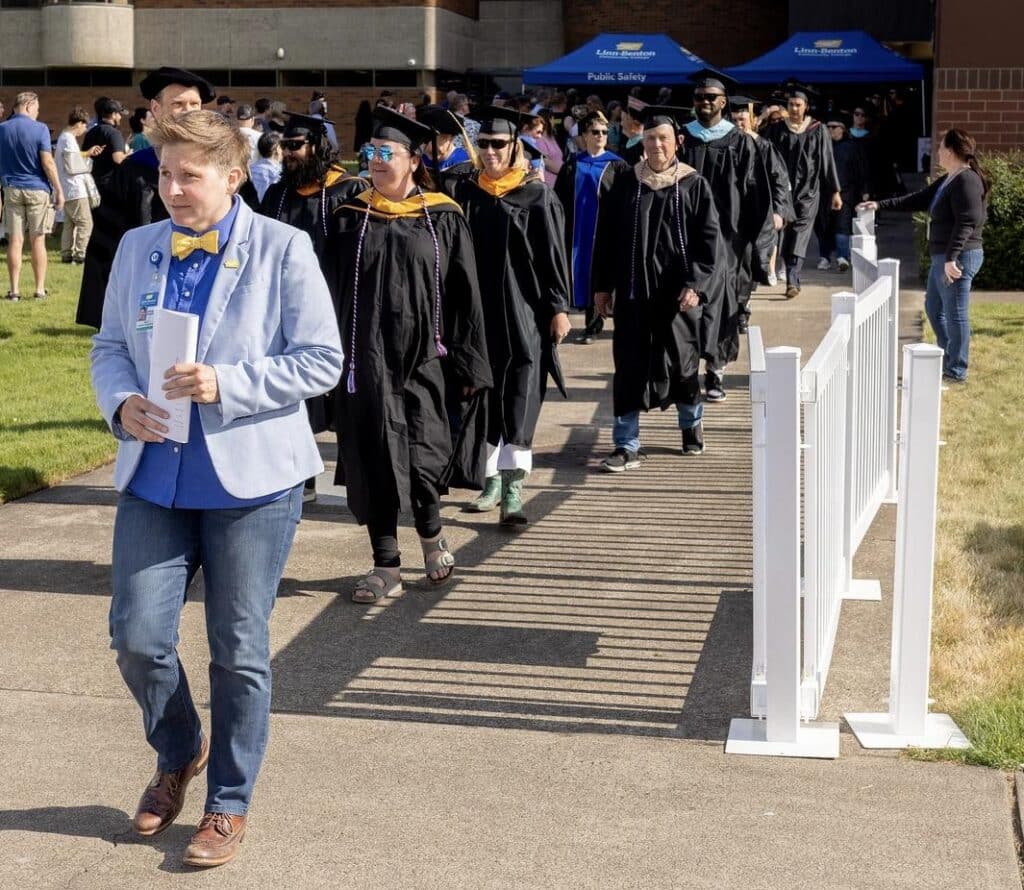
Higher education is often discussed in terms of policy, budgets, enrollment trends and workforce outcomes. Those conversations matter, but commencement reminds us of the true impact of our work.
This year’s ceremony included moments I will never forget. I held a baby while a parent accepted a diploma. I shook hands with an immigrant grandfather. I handed a diploma to a five-year-old because his mother’s arms were full with younger siblings. I embraced the family of a student we honored posthumously.
Those are the faces I carry with me into legislative meetings, accreditation visits and fundraising campaigns. They are a reminder that community colleges change not only individual lives but entire families.
In a time when higher education is surrounded by noise and division, the Family Walk offers a simple message: when students succeed, their families and entire communities succeed alongside them.
Watch a video of the LBCC Family Walk (below).