After earning a bachelor’s and master’s degree and spending a decade working in marketing, Liz Madsen knew it was time for a change.
Marketing was not her passion. She decided to return to school to pursue a career in nutrition and dietetics. When she started at Kishwaukee College (Kish) in summer 2025 to complete core science classes, she noticed a significant change compared to her first college experience.
“At first, I was taken aback by Kish’s All-In Tuition initiative. I thought surely there must be more expenses to worry about. But there aren’t any. It’s nice to have that one bill and to know this is all I have to pay for the semester,” Madsen said.
Starting in summer 2025, the Illinois college eliminated all student fees and included textbook costs in tuition. Now, students see one charge on their financial statements and have all their class materials on day one, improving cost transparency and making it easier for students and their families to budget for their education.
Returning students like Madsen and Maira Marquez have found the new model to be a pleasant surprise when budgeting for their education. When Marquez started her journey in higher education in 2011, paying for college included multiple fees, textbooks and other personal expenses, in addition to tuition. Marquez initially stopped attending school after becoming a mother but is now pursuing an associate in arts degree to advance her career.
“Life has happened. Things have changed, allowing me to resume my education. Coming back to Kish now, I had no idea how much things had changed. I think it is great what the College is doing,” Marquez said.
How it happened
Under the leadership of Kishwaukee College President Laurie Borowicz, Kish has kept a watchful eye on affordability.
“One of our most meaningful accomplishments is the recent implementation of the All-In Tuition model at Kish, which allows students to pay one price for tuition, fees and books. Reaching this milestone required tremendous effort across the college, particularly in reducing textbook costs and making the actual cost of attending Kish more affordable and transparent,” Borowicz said.
Textbook affordability was a multi-year institutional goal. Since 2018, Kish has adopted open education resources (OER), saving about $1 million in textbook costs. In fall 2023 and spring 2024, Kish eliminated all fees, saving students more than $1 million per academic year. Last summer, Kish built the cost of textbooks into the tuition price, providing students with all physical and digital course materials. This eliminated the need for students to shop independently for textbooks (unless they choose to opt out of the program) and saves the average student hundreds of dollars per semester. Kish coalesced the cost-saving measures as All-In Tuition to help the Kish community better understand the changes.
Cost transparency
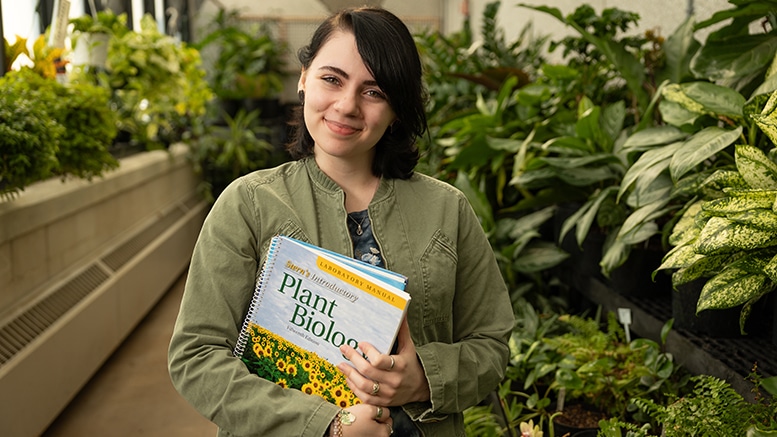
When Noël Page chose to attend Kish’s horticulture program, she had to make sure the college fit her budget. She knew her budget was tight when factoring in her 45-minute commute to campus.
“I wasn’t sure if I would be able to go to college due to the price. We were told about the All-In Tuition initiative when I was applying, and I thought it was incredible,” Page said. “I felt more secure having one solid payment instead of this fee popping up here or this fee popping up there. As someone who already budgets for commuting costs, I love that the textbooks I need are provided to me directly. I don’t need to spend extra time poring over where I might be able to buy them cheaper.”
According to a 2025 study by the Community College Research Center, 45% of students who stopped attending college said financial hardship was the reason. For both Page and her mother, Cherron, the up-front pricing of Kish’s All-In Tuition model removed guesswork, giving them confidence it fit their financial plan.
“It’s nice to know as a parent how to budget for your child’s education,” Cherron said. “It’s brilliant. I haven’t heard of any other schools doing this.”
Madsen said she appreciates how effective the Kish Store has been at finding the best course materials options for her, as she still has textbooks from her college experience on her bookshelves.
“It’s not like I want a bunch of chemistry books lying around my house that I wasn’t able to resell. I know All-In Tuition has saved me money. Kish shows the cost comparison. I don’t have to see if I can get a better deal online or shop around. I don’t have to worry about any of that,” Madsen said.
Positive student outcomes
According to research by Mike Moore, who researches equitable and inclusive access textbook programs, student completion rates increase when students have access to materials on day one.
“In our recent fall 2025 survey, students stated the number one benefit of having access to all required textbooks through the All-In Tuition Initiative was that they had all of their materials by the first day of class” said Jessica Anderson, director of marketing and Kish Store services.
Entering its third semester using the All-In Tuition model, Kish’s anecdotal evidence has shown great support for the initiative. Marquez said the initiative’s textbook component, coupled with other student success initiatives like scholarships and laptop loans, has made budgeting for the semester much easier so she can focus more on class.
“I can relax a little bit and focus more on my studies. It’s so much easier that textbooks are included in tuition,” Marquez said.
Different programs, different costs
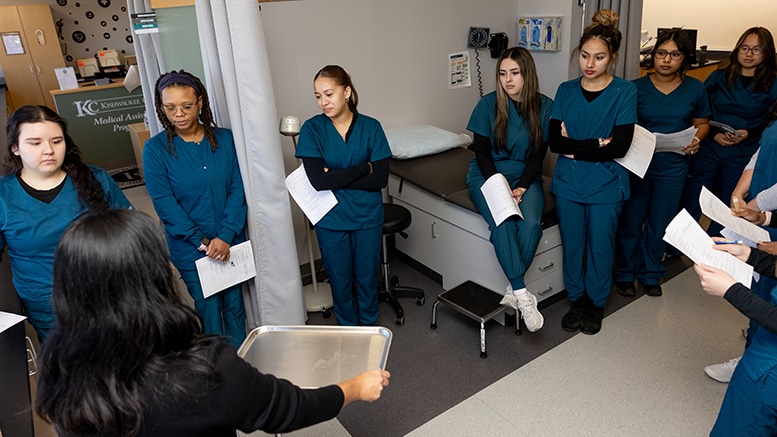
Yuliana Vazquez started at Kishwaukee College with the goal of becoming a registered nurse. While completing general education courses before officially entering the nursing program, Vazquez noted purchasing books and supplies could be complicated, with science textbooks being the most expensive.
“When I started at Kish, we didn’t have the All-In Tuition initiative yet, and I was paying for books and supplies out of pocket. Now, Kish includes everything. It is so much easier. I don’t have to worry about how much money I need to purchase my books. You just fill out a form, go to the Kish Store and pick everything up,” Vazquez said.
Health science programs, like nursing, often have higher course material costs. For example, a student pursuing an associate in arts degree might pay half as much as a registered nursing student would when purchasing textbooks independently.
To offset higher nursing textbook costs, the Kishwaukee College Foundation created the Nursing Textbook Initiative to ensure Kish’s nursing students pay the same price as everyone else while still having the resources they need to complete their education.
Kishwaukee College continues to study the impact of the All-In Tuition model and adjust to meet the needs of students.
“While I initially viewed this initiative through the lens of cost transparency, it has proven to be, at its core, a student success program — the best possible outcome,” Borowicz said.